
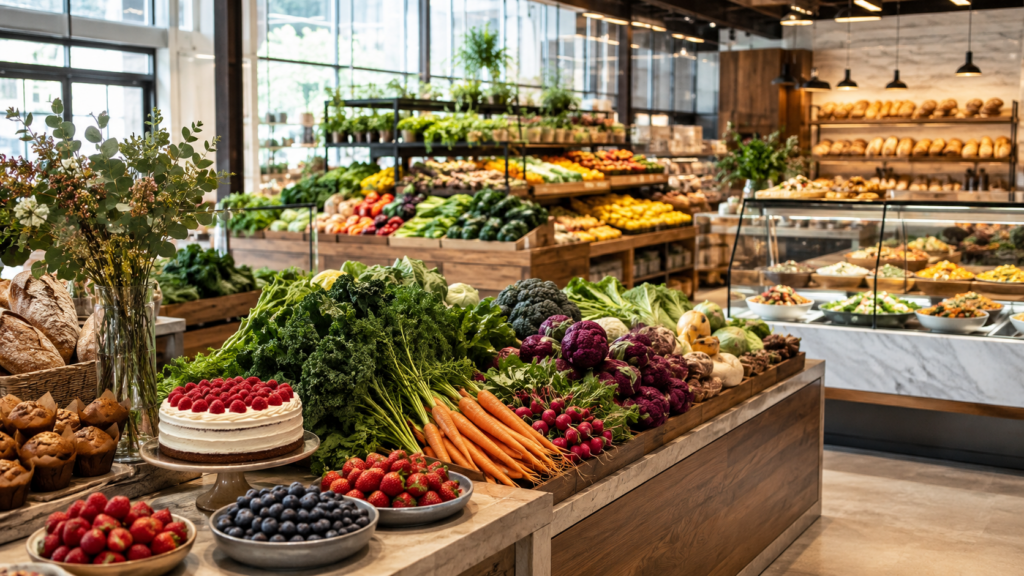
Whole Foods Market is a well-known U.S. grocery chain specializing in natural and organic foods and is owned by Amazon. This guide covers Whole Foods quality standards, the 365 private label, fresh produce, meat and seafood, the Hot Bar, Salad Bar, sushi, pizza, Berry Chantilly Cake, Seeduction Bread, and how to order groceries online through Amazon for delivery or free store pickup.
What Is Whole Foods Market? Complete U.S. Organic Grocery Guide | Best Products, Prepared Foods, Bakery, and Online Ordering
Whole Foods Market is one of the most recognizable natural and organic grocery chains in the United States.
For first-time shoppers, Whole Foods can be understood as a combination of a premium grocery store, organic food market, health-focused lifestyle shop, prepared food hall, and bakery.
Whole Foods opened its first store in Austin, Texas, in 1980 and later developed into a large supermarket chain. Amazon completed its acquisition of Whole Foods Market in 2017, and the company is now part of Amazon’s retail and grocery business.
According to official 2026 information, Whole Foods Market operates more than 550 locations across the United States, Canada, and the United Kingdom.
Whole Foods is known not only for its organic selection, but also for its quality standards, fresh meat and seafood, specialty diet products, Hot Bar, Salad Bar, sushi, pizza, rotisserie chicken, bread, and cakes.
Official website:
Whole Foods Market Official Website
Official Instagram:
Whole Foods Market Instagram
Store locator:
Whole Foods Market Store Locator
Online ordering:
Whole Foods Market Online Ordering
Whole Foods Market Quick Guide
| Category | Information |
|---|---|
| Brand name | Whole Foods Market |
| Founded | 1980 |
| Origin | Austin, Texas |
| Parent company | Amazon |
| Main markets | United States, Canada, United Kingdom |
| Number of stores | More than 550 locations |
| Main specialties | Natural food, organic food, fresh groceries, prepared meals, bakery, specialty diet products |
| Private label | 365 by Whole Foods Market |
| Prepared food options | Hot Bar, Salad Bar, sushi, pizza, rotisserie chicken, soups |
| Bakery | Artisan Bread, Sourdough, Croissant, cakes, desserts |
| Online ordering | Through Amazon and Whole Foods online ordering |
| Fulfillment options | Grocery Delivery, Pickup, and selected pantry shipping |
| Official website | wholefoodsmarket.com |
What Makes Whole Foods Different?
1. Stricter Ingredient Standards
One of Whole Foods Market’s defining features is its own ingredient and quality standards.
According to the company, foods sold in its stores exclude more than 300 preservatives, artificial colors, flavors, sweeteners, and other ingredients.
The restricted list includes hydrogenated fats, high-fructose corn syrup, aspartame, sucralose, saccharin, selected artificial colors, bleached flour, and bromated flour.
This does not mean that every Whole Foods product is automatically low in sugar, low in fat, or suitable for everyone.
However, shoppers looking for natural foods, specialty diet products, and packaged foods with simpler ingredient lists may find more options here than at many conventional supermarkets.
2. Large Organic Selection
Whole Foods was the first national grocery chain in the United States to become certified organic and remains the only national chain with that certification.
Being a certified organic grocery store means Whole Foods must follow rules related to sourcing, transportation, storage, handling, cleaning, and labeling in order to protect the integrity of organic products.
It does not mean that every item in the store is organic.
Shoppers should still look for labels such as USDA Organic or other verified organic certifications.
Common organic products include:
Organic Apples
Organic Berries
Organic Avocado
Organic Salad Greens
Organic Chicken
Organic Eggs
Organic Milk
Organic Snacks
Organic Coffee
Organic Body Care
3. Strong Selection for Special Diets
Whole Foods is especially useful for shoppers with specific dietary preferences or restrictions.
Common categories include:
Vegan
Vegetarian
Gluten-Free
Keto
Paleo
Plant-Based
Dairy-Free
Non-GMO
Organic
The official website also allows shoppers to browse products by dietary preference, including Vegan, Vegetarian, Gluten-Free, Keto-Friendly, and Paleo-Friendly.
However, labels such as Vegan, Gluten-Free, or Organic do not automatically mean a product is low-calorie or low-sugar.
Always check the nutrition facts and ingredients.
4. Detailed Meat and Seafood Standards
Whole Foods maintains its own sourcing and welfare standards for meat, seafood, and eggs.
The company states that seafood products must meet its responsible farming or sustainable wild-catch standards.
Its meat department also follows more than 100 animal welfare requirements and emphasizes traceability and antibiotic-use standards for fresh beef, pork, and chicken.
Common products include:
Beef Steak
Ground Beef
Chicken Breast
Chicken Thighs
Whole Chicken
Pork
Lamb
Sausage
Bacon
Salmon
Shrimp
Scallops
Fresh Fish
Marinated Meat
Prepared Seafood
Some stores may also provide cutting, deboning, skinning, or cooking advice at the meat and seafood counters.
Services vary by location.
5. Convenient Prepared Food Options
Whole Foods is not only a place to buy groceries.
Many larger stores have full Prepared Foods departments where shoppers can buy breakfast, lunch, or dinner.
Some stores also offer indoor seating, coffee bars, juice bars, or in-store restaurants.
Common prepared food areas include:
Hot Bar
Salad Bar
Pizza Counter
Sushi Counter
Sandwich Counter
Soup Station
Rotisserie Chicken
Prepared Meals
Grab-and-Go Refrigerated Meals
Not every store has the same amenities.
Check the individual store page before visiting.
What Products Does Whole Foods Sell?
Fresh Produce
The Produce Department usually separates organic and conventional items clearly.
Common products include:
Organic Berries
Organic Apples
Avocado
Salad Greens
Citrus
Fresh Herbs
Cherry Tomatoes
Seasonal Fruit
Cut Fruit
Fresh Juice
Ready-to-Eat Salad Kits
Organic berries, leafy greens, herbs, avocados, and seasonal fruit are among the most popular items to browse.
Prices vary by city, season, origin, and organic certification.
Meat and Seafood
The meat department carries beef, chicken, pork, lamb, sausage, and marinated products.
The seafood department commonly offers:
Salmon
Shrimp
Scallops
Cod
Tuna
Fresh Fish Fillets
Marinated Seafood
Prepared Seafood
Shoppers who do not want to prepare dinner from scratch can also buy marinated chicken, seasoned salmon, seafood skewers, or ready-to-heat meal components.
Dairy and Refrigerated Foods
Common refrigerated products include:
Organic Milk
Plant Milk
Greek Yogurt
Specialty Cheese
Eggs
Butter
Hummus
Refrigerated Pasta
Fresh Salsa
Salad Dressing
Vegan Cheese
Dairy-Free Products
The specialty cheese section often includes local American cheese, imported European cheese, and options designed for wine pairing or cheese boards.
Snacks and Pantry Items
Common pantry products include:
Organic Chips
Nuts
Dried Fruit
Protein Bars
Chocolate
Granola
Nut Butter
Pasta
Olive Oil
Coffee
Tea
Canned Beans
Soup
Spices
Gluten-Free Snacks
Whole Foods carries many natural food brands, smaller independent brands, local products, and its own 365 private label.
Frozen Foods
The frozen section commonly includes:
Frozen Pizza
Frozen Vegetables
Frozen Fruit
Vegan Frozen Meals
Plant-Based Meat
Ice Cream
Frozen Desserts
Gluten-Free Meals
Frozen Breakfast Foods
Frozen Seafood
For shoppers with limited cooking time, the frozen meals, vegetables, pizza, and plant-based products can be especially convenient.
What Is 365 by Whole Foods Market?
365 by Whole Foods Market is the company’s private-label brand.
Whole Foods currently lists more than 3,500 products under the 365 brand, covering food, supplements, personal care, and household cleaning products.
Common products include:
365 Organic Milk
365 Eggs
365 Bread
365 Bagels
365 Pasta
365 Olive Oil
365 Coffee
365 Nuts
365 Frozen Vegetables
365 Frozen Pizza
365 Spices
365 Cleaning Products
365 Shampoo
365 Body Wash
Within Whole Foods, 365 is usually one of the more budget-friendly product lines.
However, not every 365 product is automatically cheaper than the equivalent item at Trader Joe’s, Target, Walmart, Costco, Amazon Fresh, or a local supermarket.
Comparing unit prices is still worthwhile.
Whole Foods Prepared Foods Guide
Hot Bar
The Hot Bar is one of the most popular sections at Whole Foods.
Customers take a container, choose the amount they want, and pay according to weight.
The food changes by store, city, day, and time of day.
Common dishes include:
Rotisserie Chicken
Fried Chicken
Mac and Cheese
Roasted Vegetables
Mashed Potatoes
Rice
Grain Bowls
Curry
Indian Food
Asian Stir Fry
Pasta
Meatballs
Vegan Dishes
Vegetarian Dishes
Keto-Friendly Food
Paleo-Friendly Food
Whole Foods describes the Hot Bar as a place to find comfort food, international dishes, and options for diets such as Keto and Paleo.
The main thing to remember is that the Hot Bar is sold by weight.
Heavy meats, fried foods, curries, and saucy dishes can increase the final price quickly.
For a first visit, take a smaller portion and check the store’s current price per pound before filling the container.
Salad Bar
The Salad Bar is also usually priced by weight.
Common options include:
Romaine Lettuce
Mixed Greens
Kale
Quinoa
Brown Rice
Beans
Roasted Vegetables
Chicken
Boiled Eggs
Cheese
Nuts
Seeds
Croutons
Salad Dressing
It is useful for building a custom salad, grain bowl, or high-protein lunch.
Keep in mind that dressings, protein toppings, and high-moisture ingredients can make the container heavier.
Rotisserie Chicken
Whole Foods Rotisserie Chicken is one of the most practical prepared food options.
It can be served with salad, bread, potatoes, or vegetables.
Leftovers can also be shredded and used for sandwiches, chicken salad, pasta, wraps, or lunch the next day.
Some stores may offer Tuesday Prime-member promotions on rotisserie chicken or selected prepared foods.
Promotions, prices, and availability vary by location and week.
Fresh Pizza
Many Whole Foods stores have a Pizza Counter where shoppers can buy individual slices or a whole pizza.
Common varieties may include:
Cheese Pizza
Pepperoni Pizza
Vegetable Pizza
Mushroom Pizza
Margherita Pizza
Seasonal Pizza
Some stores offer Friday pizza promotions for Prime members.
Availability and details vary by store.
Sushi
Many locations offer Genji Sushi or another sushi program that follows Whole Foods sourcing standards.
Common products include:
California Roll
Spicy Tuna Roll
Salmon Avocado Roll
Vegetable Roll
Nigiri
Sashimi
Sushi Combo
Poke Bowl
Some locations may also offer Friday sushi promotions.
Selection and discounts depend on the store.
Soups, Sandwiches, and Packaged Meals
In addition to self-service counters, Whole Foods sells many packaged Grab-and-Go items.
Common choices include:
Sandwich
Wrap
Prepared Salad
Deli Salad
Soup
Pasta
Quiche
Pot Pie
Breakfast Burrito
Breakfast Sandwich
Sushi
Side Dishes
Cheese Plate
Fruit Cup
These items are easier to budget for because they have fixed prices instead of weight-based pricing.
They are useful for work, school, road trips, or quick meals.
Whole Foods Bakery Guide
The Whole Foods Bakery sells bread, breakfast pastries, cookies, pies, cupcakes, and celebration cakes.
The company states that bakery products must meet its general food ingredient standards and exclude ingredients such as hydrogenated fats, high-fructose corn syrup, bleached flour, and bromated flour.
Common bakery products include:
Artisan Bread
Sourdough Bread
Baguette
Croissant
Muffin
Cookie
Pie
Cupcake
Birthday Cake
Seasonal Cake
Gluten-Free Bread
Gluten-Free Dessert
Vegan Bakery Items
Berry Chantilly Cake
Berry Chantilly Cake is one of Whole Foods Market’s signature desserts.
It usually features vanilla cake, Chantilly cream or mascarpone-style frosting, and fresh berries.
Whole Foods promotes it as one of its most recognizable exclusive bakery products.
Common versions include:
Berry Chantilly Cake
Berry Chantilly Cupcake
Whole Berry Chantilly Cake
Berry Chantilly Cake Slice
The exact berries may change depending on quality and availability.
It is especially popular for:
Birthdays
Friend gatherings
Baby showers
Office celebrations
Holiday meals
Last-minute cake purchases
Seeduction Bread
Seeduction Bread is one of the bakery’s best-known multiseed breads.
It contains sesame seeds, poppy seeds, pumpkin seeds, and millet.
The bread has a more substantial texture than ordinary white bread and is made with unbleached, unbromated flour, with small amounts of honey and molasses for flavor.
It works well for:
Avocado Toast
Turkey Sandwich
Tuna Salad Sandwich
Grilled Vegetable Sandwich
Grilled Cheese
Breakfast Toast
Croutons
Bread Crumbs
If you do not plan to finish the loaf quickly, slice and freeze it, then toast individual pieces as needed.
Sourdough and Artisan Bread
Other common bakery breads include:
Sourdough
French Baguette
Ciabatta
Multigrain Bread
Whole Wheat Bread
Rye Bread
Dinner Rolls
Bagels
Some items may be baked in-store, while others may come from regional bakery facilities.
Selection varies by city and store.
How to Order a Whole Foods Cake
Some Whole Foods locations accept orders for birthday cakes, holiday cakes, and custom cakes.
You can ask by:
-
Visiting the Bakery counter.
-
Calling your local Whole Foods store.
-
Checking whether that store offers online cake ordering.
-
Confirming size, flavor, decoration, pickup date, and allergen information.
-
Completing any required payment or deposit.
Whole Foods states that some ready-made cakes can be ordered online, but full customization is usually not available through online grocery ordering.
Custom writing, decorations, and special requests should be confirmed directly with the Bakery department.
Other Whole Foods Departments
Specialty Cheese
Common products include:
Brie
Cheddar
Gouda
Goat Cheese
Blue Cheese
Parmigiano Reggiano
Mozzarella
Burrata
Imported Cheese
Local Cheese
Some stores also sell olives, pickled vegetables, cured meats, and crackers designed for cheese boards.
Beauty and Body Care
Whole Foods also sells personal care products.
Common items include:
Shampoo
Conditioner
Body Wash
Soap
Face Care
Body Lotion
Essential Oils
Natural Deodorant
Lip Balm
Sunscreen
Whole Foods also has restricted ingredient standards for body care products and states that it excludes more than 240 related ingredients.
Supplements
Common products include:
Multivitamins
Vitamin C
Vitamin D
Magnesium
Probiotics
Protein Powder
Collagen
Herbal Tea
Electrolytes
Supplements should not replace medical diagnosis or treatment.
Anyone who is pregnant, breastfeeding, taking medication, or managing a medical condition should speak with a doctor or pharmacist before using supplements.
Household Cleaning Products
Common products include:
Dish Soap
Laundry Detergent
Surface Cleaner
Hand Soap
Paper Products
Reusable Bags
Compostable Products
Whole Foods also maintains ingredient and performance standards for household cleaning products.
Where Can You Find Whole Foods?
Whole Foods stores are located in many major U.S. cities, suburbs, and densely populated residential areas.
The company also operates in Canada and the United Kingdom.
Official 2026 information indicates that the chain has more than 550 stores across its markets.
How to Find a Nearby Store
-
Open the Whole Foods Store Locator.
-
Enter a city, state, or ZIP Code.
-
Select a nearby store.
-
Review the address and operating hours.
-
Check whether Delivery or Pickup is available.
-
Look for amenities such as Hot Bar, Bakery, Sushi, Pizza, or Amazon Returns.
-
Review current weekly deals and Prime-member prices.
The store locator displays addresses, hours, weekly promotions, online ordering options, and available store services.
How to Order Whole Foods Online
Whole Foods grocery ordering in the United States is handled mainly through Amazon.
Available services may include:
Grocery Delivery
Free Grocery Pickup
Pantry Shipping
Catering
Gift Cards
Delivery and Pickup availability depend on the ZIP Code and participating store.
Whole Foods Online Ordering Steps
-
Open the Amazon app or Amazon website.
-
Search for Whole Foods Market.
-
Enter your delivery address or ZIP Code.
-
Select an available nearby Whole Foods store.
-
Browse produce, meat, seafood, prepared foods, bakery products, and household items.
-
Add items to the cart.
-
Choose Delivery or Pickup.
-
Select a delivery or pickup window.
-
Set substitution preferences for out-of-stock products.
-
Complete payment.
-
Track the order in the Amazon app.
Official ordering page:
Whole Foods Market Online Ordering
Amazon shopping page:
Amazon Whole Foods Market
How Much Does Whole Foods Delivery Cost?
Amazon currently states that standard one-hour and two-hour Whole Foods grocery delivery orders generally include a US$9.95 service fee.
This fee supports equipment, technology, and delivery operations and is not the same as a driver tip.
The final checkout total may also include:
Product cost
Sales tax
Delivery service fee
Bag fee
Tip
Low-order fee or other applicable charges
Always review the Amazon checkout page for the final amount.
Whole Foods Unlimited Grocery Delivery Subscription
Eligible Prime members can subscribe to Amazon Grocery Subscription.
Current pricing is:
US$9.99 per month
US$99.99 per year
Qualifying Whole Foods Market grocery orders may receive free standard delivery under the subscription.
Minimum order amounts, service areas, and additional fees may still apply.
If you order Whole Foods only once a month, compare the US$9.95 one-time delivery fee with the subscription price.
For frequent Whole Foods or Amazon Fresh customers, the subscription may offer better value.
Can You Order Online and Pick Up at Whole Foods?
Yes.
Eligible ZIP Codes and participating stores offer Grocery Pickup.
Whole Foods currently describes qualifying Pickup orders as free, and some stores may offer fast pickup windows.
The process generally works like this:
-
Select Whole Foods Market in Amazon.
-
Change the fulfillment method to Pickup.
-
Choose a pickup store.
-
Select a pickup window.
-
Complete payment.
-
Wait for the order-ready notification.
-
Follow instructions to the designated pickup area.
-
Some stores may offer curbside pickup or bring the order to your vehicle.
Pickup procedures vary by location.
Follow the instructions shown in the Amazon app.
Can You Use SNAP EBT at Whole Foods?
Eligible customers can add a supported SNAP EBT card to their Amazon account and use it for qualifying Whole Foods grocery items.
Delivery fees, tips, non-food items, and products that do not meet SNAP rules generally cannot be paid for with SNAP EBT.
Eligibility, supported products, and payment rules depend on the account and location.
What Benefits Do Prime Members Get at Whole Foods?
Amazon Prime members can access Prime-exclusive prices and promotions at Whole Foods.
Common benefits may include:
Prime Member Deals
Extra discounts on sale items
Tuesday and Friday promotions
Whole Foods App member barcode
Amazon App In-Store Code
Eligible grocery delivery subscriptions
Prime Visa purchase rewards
Whole Foods currently states that Prime members may receive an additional 10% off eligible storewide sale items, excluding products such as alcohol and other restricted categories.
Promotions and terms vary.
Whole Foods Tuesday and Friday Deals
Whole Foods currently promotes selected weekly deals.
Tuesday Promotions May Include:
Rotisserie Chicken
Soup
Easy Weeknight Meals
Prepared Foods
Friday Promotions May Include:
Pizza
Sushi
Oysters
Weekend Favorites
These are generally in-store promotions and may require Prime-member identification.
Products, dates, quantities, and restrictions can change.
Current promotions:
Whole Foods Days of Deals
What Is Worth Buying at Whole Foods?
First-time shoppers may want to look for the following.
1. Berry Chantilly Cake
A signature berry cake suitable for birthdays and gatherings.
2. Seeduction Bread
A multiseed bread that works well for toast, sandwiches, and avocado toast.
3. Rotisserie Chicken
A convenient ready-to-eat protein that can be used across several meals.
4. Hot Bar
Useful for combining meat, vegetables, grains, and international dishes.
5. Salad Bar
Good for building customized salads, grain bowls, and high-protein lunches.
6. Genji Sushi
A convenient option for lunch and takeout.
7. Whole Foods Pizza
Available by the slice or as a whole pizza, with possible Friday Prime promotions.
8. 365 by Whole Foods Market
Includes milk, eggs, pasta, snacks, frozen products, and household essentials.
9. Organic Produce
Whole Foods offers a wide selection of organic berries, leafy greens, avocados, apples, and herbs.
10. Specialty Cheese
Useful for cheese boards, parties, and wine pairings.
11. Salmon and Seafood
A strong option for fresh fish or ready-to-cook marinated seafood.
12. Vegan and Gluten-Free Products
Whole Foods generally has a broader selection of specialty diet products than many conventional supermarkets.
Who Is Whole Foods Best For?
Shoppers Looking for Organic Food
Whole Foods offers a large selection of organic produce, meat, dairy, snacks, and personal care products.
People with Special Diet Needs
Vegan, Vegetarian, Gluten-Free, Keto, Paleo, and Dairy-Free products are usually easier to find.
People Who Do Not Want to Cook Every Day
Hot Bar, Salad Bar, sushi, rotisserie chicken, pizza, and packaged meals can provide quick meal solutions.
Shoppers Who Enjoy Bakeries and Desserts
Berry Chantilly Cake, Seeduction Bread, Sourdough, Croissant, and seasonal cakes are worth browsing.
Budget-Conscious Shoppers
Whole Foods requires more selective shopping.
Focus on the 365 private label, weekly sales, Prime discounts, and smaller Hot Bar portions.
Whole Foods Disadvantages
Prices Are Often Higher
Products that may cost more than at conventional supermarkets include:
Organic Produce
Meat
Seafood
Specialty Cheese
Prepared Foods
Hot Bar
Small-Batch Snacks
Imported Products
Special Diet Products
The Hot Bar Can Become Expensive
The Hot Bar and Salad Bar are generally sold by weight.
Meat, sauce-heavy food, wet ingredients, and large portions can make the final price much higher than expected.
Store Amenities Vary
Not every Whole Foods has a full:
Hot Bar
Salad Bar
Pizza Counter
Sushi Counter
Coffee Bar
Juice Bar
Indoor Seating
Curbside Pickup
Amazon Returns
Check the store page before visiting.
Not Every Product Is Organic
Whole Foods carries many organic products, but it also sells conventional products.
Look for labels such as:
USDA Organic
Certified Organic
Non-GMO
Vegan
Gluten-Free
Dairy-Free
Do not assume that every product is organic simply because it is sold at Whole Foods.
How to Save Money at Whole Foods
-
Start with 365 by Whole Foods Market products.
-
Use your Amazon Prime member barcode.
-
Check the weekly sales flyer.
-
Look for Tuesday and Friday deals.
-
Compare unit prices and price per ounce.
-
Take smaller portions from the Hot Bar.
-
Buy seasonal produce.
-
Compare organic and conventional versions.
-
Consider Grocery Subscription only if you order frequently.
-
Use free Grocery Pickup to avoid delivery fees.
-
Buy one Rotisserie Chicken and use it for several meals.
-
Make a shopping list before browsing snacks and desserts.
Weekly deals:
Whole Foods Sales Flyer
Final Thoughts: Whole Foods Is More Than an Organic Grocery Store
Whole Foods Market can be described as a U.S. grocery chain centered on natural foods, organic products, premium fresh groceries, specialty diets, and convenient prepared meals.
The most interesting departments include:
Produce Department
Meat Department
Seafood Department
Hot Bar
Salad Bar
Prepared Foods
Bakery
Specialty Cheese
365 by Whole Foods Market
Beauty and Body Care
For a first visit, consider trying Berry Chantilly Cake, Seeduction Bread, Rotisserie Chicken, the Hot Bar, Genji Sushi, Whole Foods Pizza, and selected 365 products.
For online grocery shopping, use Amazon and choose Delivery or free Pickup.
Standard Whole Foods delivery currently carries a US$9.95 service fee, while frequent Prime customers may compare the US$9.99 monthly or US$99.99 annual grocery delivery subscription.
Official website:
Whole Foods Market
Store locator:
Whole Foods Market Store Locator
Online ordering:
Whole Foods Market Online Ordering
Disclaimer:
Brand information, product categories, quality standards, store count, Prime promotions, prepared food options, online ordering, delivery fees, and pickup procedures in this article were compiled from official Whole Foods Market, Amazon, and About Amazon information.
Products, prices, prepared food menus, bakery selection, cake sizes, store amenities, Prime promotions, service fees, delivery areas, and pickup windows may vary by city, ZIP Code, store, season, membership eligibility, and official policy.
Terms such as natural, organic, Vegan, Gluten-Free, Keto, and Paleo do not mean that a product is suitable for everyone and do not constitute health or medical advice.
Review ingredients, nutrition facts, allergen information, and certification labels before purchasing.
Image source: Official brand websites and official social media accounts.
FAQ
What is Whole Foods Market?
Whole Foods Market is a U.S. grocery chain specializing in natural and organic foods, fresh produce, meat, seafood, prepared meals, bakery products, specialty diet items, personal care, and cleaning products.
Is Whole Foods owned by Amazon?
Yes. Amazon completed its acquisition of Whole Foods Market in 2017.
Is everything at Whole Foods organic?
No. Whole Foods carries many organic products, but it also sells conventional products. Look for USDA Organic or another verified organic certification.
How many Whole Foods stores are there?
Official 2026 information indicates that Whole Foods Market has more than 550 locations in the United States, Canada, and the United Kingdom.
What are the most famous Whole Foods products?
Popular products include Berry Chantilly Cake, Seeduction Bread, Rotisserie Chicken, Hot Bar, Salad Bar, Genji Sushi, Whole Foods Pizza, and 365 private-label items.
What is the Whole Foods Hot Bar?
The Hot Bar is a self-service prepared food area where customers choose foods such as rotisserie chicken, fried chicken, Mac and Cheese, vegetables, curry, rice, pasta, and vegetarian dishes, then pay by weight.
Is the Whole Foods Hot Bar expensive?
It can be. The Hot Bar is sold by weight, so meat, sauce-heavy food, and large portions can cost more than a regular lunch.
Does Whole Foods have a Salad Bar?
Many larger stores have a Salad Bar with greens, grains, beans, vegetables, chicken, eggs, cheese, and dressing, sold by weight.
What cakes does Whole Foods sell?
Berry Chantilly Cake is the best-known option. Stores may also sell birthday cakes, cupcakes, pies, and seasonal desserts.
Can I order a birthday cake from Whole Foods?
Some stores accept cake orders. Visit or call the Bakery department to ask about size, flavor, writing, decoration, and pickup date.
How do I order Whole Foods online?
Use the Amazon app, Amazon website, or Whole Foods Online Ordering page and choose Delivery or Pickup.
How much is Whole Foods delivery?
Standard one-hour or two-hour Whole Foods grocery delivery orders currently carry a US$9.95 service fee. Final charges are shown at checkout.
Is Whole Foods Pickup free?
At participating stores and eligible ZIP Codes, Whole Foods Grocery Pickup is currently available without a pickup fee.
How much is Whole Foods unlimited grocery delivery?
Eligible Prime members can subscribe to Amazon Grocery Subscription for US$9.99 per month or US$99.99 per year.
Do I need Amazon Prime to shop at Whole Foods?
No. Prime membership is not required for in-store shopping. Prime members mainly receive selected discounts, additional sale savings, and access to certain grocery delivery benefits.
Does Whole Foods have a private label?
Yes. 365 by Whole Foods Market is the store’s private label and includes food, beverages, supplements, personal care, and cleaning products.
How do I find a nearby Whole Foods store?
Use the Whole Foods Store Locator and enter a city, state, or ZIP Code to view nearby locations, hours, current deals, and available services.