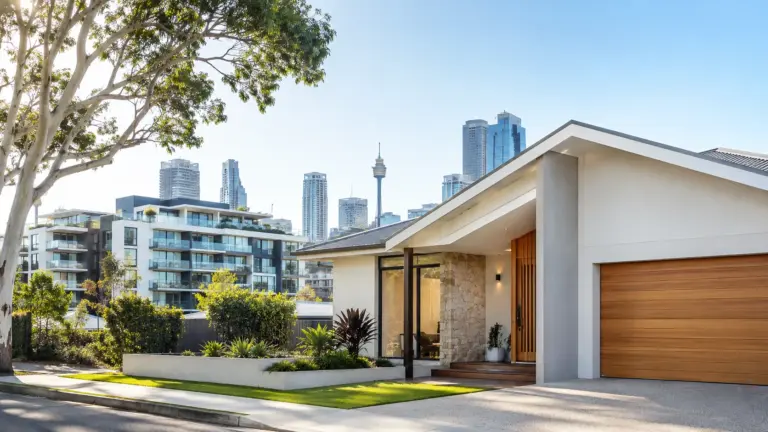

How do you buy a home in Canada in 2026? This guide covers minimum down payments, mortgage applications, the mortgage stress test, CMHC mortgage insurance, 30-year amortizations, current mortgage rates, closing costs, land transfer taxes, Toronto and Vancouver foreign buyer taxes, realtor fees, FHSA, the Home Buyers’ Plan and GST/HST rebates for first-time home buyers.
Buying a Home in Canada in 2026|Down Payment, Mortgage Rates, Taxes, Realtor Fees and Foreign Buyer Rules
Buying a home in Canada requires much more than simply calculating the purchase price minus your mortgage.
Your down payment, mortgage loan insurance, interest rate, mortgage stress test, land transfer tax, legal fees, home inspection, title insurance, real estate representation agreement and provincial foreign buyer taxes can all significantly affect how much cash you actually need.
The rules become even more complicated if you are buying in Toronto or Vancouver.
In 2026, if you are not a Canadian citizen or permanent resident, the first question may not even be how large a mortgage you can qualify for.
You first need to determine whether you are legally allowed to purchase that particular residential property.
This guide explains the key rules for buying a home in Canada in 2026, including down payments, mortgages, interest rates, taxes, closing costs and first-time home buyer programs.
Canada Home Buying Rules at a Glance
| Item | 2026 Rule |
|---|---|
| Homes up to CAD$500,000 | Minimum 5% down payment |
| CAD$500,000 to under CAD$1.5 million | 5% on first CAD$500K + 10% on the remainder |
| CAD$1.5 million or more | Minimum 20% down payment |
| Less than 20% down | Mortgage loan insurance usually required |
| Maximum price for insured mortgage | Less than CAD$1.5 million |
| Standard maximum amortization | Usually 25 years |
| Eligible first-time buyers / newly built homes | Up to 30-year amortization |
| Mortgage stress test | Contract rate + 2% or 5.25%, whichever is higher |
| GDS | Generally up to about 39% |
| TDS | Generally up to about 44% |
| Bank of Canada policy rate, July 15, 2026 | 2.25% |
| Major-bank prime rate reference | About 4.45% |
| Suggested closing-cost reserve | About 1.5%–4% of purchase price |
| Federal foreign buyer ban | Extended until January 1, 2027, with certain exceptions |
Canada’s current minimum down-payment rules allow high-ratio insured mortgages on qualifying homes priced below CAD$1.5 million.
Step One: Confirm Whether You Are Allowed to Buy
Canadian citizens and permanent residents are generally not restricted by the federal foreign buyer ban when purchasing ordinary residential property.
However, if you are not a Canadian citizen or permanent resident, you should not assume that having enough money automatically means you can purchase a home.
Canada’s federal Prohibition on the Purchase of Residential Property by Non-Canadians Act has been extended until:
January 1, 2027.
In general, foreign nationals who are not Canadian citizens or permanent residents, as well as certain foreign-controlled entities, remain restricted from purchasing affected Canadian residential property.
However, there are exceptions.
Depending on the circumstances, certain people with valid work permits, some international students, certain refugee-related applicants and buyers purchasing particular types or locations of property may qualify for an exemption.
If you currently hold a:
Work Permit
Study Permit
Temporary Resident status
Foreign investor status
Foreign corporation interest
Or you are preparing to immigrate to Canada
it is especially important to have a Canadian real estate lawyer confirm your eligibility before signing an Agreement of Purchase and Sale.
Another critical point:
Being exempt from the federal foreign buyer ban does not automatically mean you are exempt from provincial or municipal foreign buyer taxes.
Ontario, Toronto and British Columbia have separate tax systems.
How Much Down Payment Do You Need in Canada?
Canada does not require every home buyer to put down 20%.
The minimum down payment depends on the purchase price.
Homes Priced at CAD$500,000 or Less
Minimum down payment:
5% of the purchase price.
Example:
CAD$400,000 home
Minimum down payment:
CAD$20,000
Homes from CAD$500,000 to Under CAD$1.5 Million
The minimum is calculated as:
5% on the first CAD$500,000
plus
10% on the portion above CAD$500,000.
For example, if you buy a:
CAD$800,000 home
Calculation:
First CAD$500,000 × 5% = CAD$25,000
Remaining CAD$300,000 × 10% = CAD$30,000
Minimum down payment:
CAD$55,000
Homes Priced at CAD$1.5 Million or More
If the property costs CAD$1.5 million or more, the minimum down payment is:
20%.
For example:
CAD$1.6 million home
Minimum down payment:
CAD$320,000
These properties are also above the normal purchase-price limit for high-ratio CMHC-insured mortgages.
What Happens If Your Down Payment Is Less Than 20%?
If your down payment is below 20%, you will usually need mortgage loan insurance.
One of the best-known forms is:
CMHC Mortgage Loan Insurance.
It is important to understand that mortgage default insurance primarily protects the lender, not the borrower.
If the borrower stops making mortgage payments, the insurance helps reduce the lender’s loss.
How Much Does CMHC Mortgage Insurance Cost?
CMHC premiums are based on the loan-to-value ratio, or LTV.
Common premium levels for owner-occupied properties include:
| Loan-to-Value | Approximate CMHC Premium |
|---|---|
| 80.01%–85% | 2.80% |
| 85.01%–90% | 3.10% |
| 90.01%–95% | 4.00% |
If you make close to the minimum 5% down payment, your LTV may be close to 95%, meaning the mortgage insurance premium can be around 4% of the mortgage amount.
The insurance premium can generally be added to the mortgage principal.
However, in provinces such as Ontario, Quebec and Saskatchewan, provincial sales tax may apply to mortgage insurance premiums.
That sales tax generally cannot be rolled into the mortgage and may need to be paid separately at closing.
Can You Get a 30-Year Mortgage in Canada?
Yes, but not every buyer automatically qualifies.
Under the current CMHC Home Start program, qualifying:
First-Time Home Buyers
and
Buyers of Newly Built Homes
may be eligible for an amortization period of up to 30 years.
For many other insured mortgages, the standard maximum amortization remains 25 years.
Advantages of a 30-Year Amortization
The main advantage is:
Lower monthly mortgage payments.
With the same mortgage balance and interest rate, stretching repayment over 30 years usually reduces the required monthly payment compared with a 25-year amortization.
This can help first-time buyers who have sufficient income but want more monthly cash-flow flexibility.
Disadvantages of a 30-Year Amortization
The main disadvantage is:
Higher total interest.
Because the principal is repaid more slowly, interest accrues over a longer period.
A 30-year mortgage is therefore not necessarily a cheaper mortgage.
It is a way to exchange a longer repayment period for a lower required monthly payment.
How Do You Apply for a Mortgage in Canada?
The home-buying process usually starts with a mortgage pre-approval.
You can approach a:
Bank
Credit Union
Mortgage Broker
Other Mortgage Lender
The lender may review:
Income
Employment status
Credit score
Credit history
Source of down payment
Credit card debt
Car loans
Student loans
Other debt
Property taxes
Condo fees
Heating costs
Mortgage Pre-Approval Does Not Guarantee Final Approval
This is an important distinction.
A mortgage pre-approval is only an initial assessment based on your current income, debt, credit history and other financial information.
After you find a home and your offer is accepted, the lender may still review:
Purchase price
Property appraisal
Property type
Condo documents
Updated income documents
Employment status
Source of down payment
Whether the property itself meets lending requirements
Therefore, having a pre-approval does not mean your final mortgage is guaranteed.
This is also why buyers should be cautious about removing a financing condition simply because they already have a pre-approval.
How Do Banks Decide Whether You Can Afford the Home?
Two important ratios commonly used in Canadian mortgage underwriting are:
GDS
and
TDS.
GDS: Gross Debt Service Ratio
A common maximum is around:
39%.
GDS generally measures housing-related expenses such as:
Mortgage principal
Mortgage interest
Property tax
Heating
A portion of condo fees
These housing costs generally should not exceed around 39% of household gross income under standard insured-mortgage guidelines.
TDS: Total Debt Service Ratio
A common maximum is around:
44%.
TDS includes housing costs plus other debts such as:
Car loans
Student loans
Credit cards
Lines of credit
Other loans
CMHC’s standard mortgage-insurance qualification framework commonly uses approximately 39% GDS and 44% TDS.
What Is the Canadian Mortgage Stress Test?
Even if your actual mortgage rate is around 4%, the bank may not qualify you using that exact rate.
For uninsured mortgages, the current minimum qualifying rate generally uses:
Your mortgage contract rate + 2%
or
5.25%
whichever is higher.
For example:
Actual mortgage rate:
4.00%
Stress-test qualifying rate:
4.00% + 2% = 6.00%
The lender may therefore test whether you could still afford your mortgage if payments were calculated at 6%.
This is one reason some buyers calculate that they can comfortably afford a home, but then receive a lower mortgage pre-approval than expected.
What Are Canadian Mortgage Rates in 2026?
Mortgage rates vary by lender, borrower, province, mortgage type and day.
There is no single correct statement such as:
“Mortgage rates in Canada are 4%.”
As of July 15, 2026, the Bank of Canada policy rate was:
2.25%.
Major Canadian bank reference rates around this period included approximately:
Prime Rate: 4.45%
Five-Year Conventional Mortgage Posted Rate: about 6.09%
However, a posted mortgage rate is often different from the discounted rate that a qualified borrower actually receives.
Recent Bank of Canada lending data also showed that actual newly issued residential mortgage rates could be materially lower than posted rates.
The final rate you receive may depend on:
Fixed versus variable rate
Insured versus uninsured mortgage
Mortgage term
Amortization
Credit profile
Down payment
Loan amount
Property type
Lender promotions
Fixed Rate vs. Variable Rate Mortgage
Fixed-Rate Mortgage
Your mortgage interest rate remains fixed during the mortgage term.
Advantages:
Payments are easier to predict
Rate increases do not immediately affect your existing term
Household budgeting is easier
May be suitable for:
Buyers who prefer stability
People who do not want short-term rate volatility
First-time buyers with tighter monthly cash flow
Variable-Rate Mortgage
Variable-rate mortgages generally move in relation to the lender’s prime rate.
Advantages:
If market rates fall, your borrowing cost may decrease.
Disadvantages:
If prime rates rise, your payment or the allocation between principal and interest may change depending on the mortgage structure.
May be suitable for:
Borrowers with stronger cash-flow buffers
People who can tolerate interest-rate fluctuations
Buyers willing to accept more financial uncertainty
Neither option is automatically better.
The best choice depends on income stability, time horizon and risk tolerance.
How Much Should You Budget for Closing Costs?
One of the most common first-time buyer mistakes is saving enough for the down payment but not enough for closing.
The Financial Consumer Agency of Canada recommends budgeting approximately:
1.5%–4% of the purchase price
for upfront and closing costs.
For a CAD$800,000 home:
1.5%–4% would equal approximately:
CAD$12,000–32,000.
And in cities such as Toronto, where buyers may face both provincial and municipal land transfer taxes, the actual amount can be higher.
Common Closing Costs in Canada
Typical expenses may include:
Lawyer or Notary Fees
Land Transfer Tax
Property Transfer Tax
Home Inspection
Appraisal
Title Insurance
Property Tax Adjustments
Utility Adjustments
Home Insurance
Moving Costs
Taxes related to mortgage insurance premiums
Condo document or status certificate costs
GST/HST on qualifying new homes
How Much Does Title Insurance Cost?
Title insurance protects against certain ownership and title-related risks.
Examples may include:
Title fraud
Ownership defects
Certain registration problems
Document errors
A typical one-time title insurance premium may be around:
CAD$150–350
although the amount can be higher depending on property value and coverage.
Many mortgage lenders also require lender title insurance.
Buying in Ontario: Land Transfer Tax
If you buy property in Ontario, you will usually pay Ontario Land Transfer Tax at closing.
It is calculated using progressive tax brackets.
Ontario’s structure includes rates such as:
First CAD$55,000: 0.5%
CAD$55,000–250,000: 1%
CAD$250,000–400,000: 1.5%
Higher portions: generally 2%
Certain portions of qualifying high-value residential property may be taxed at 2.5%.
Eligible first-time home buyers may also qualify for an Ontario Land Transfer Tax refund.
Why Are Toronto Closing Costs Higher?
If the property is located within the City of Toronto, buyers do not only pay Ontario Land Transfer Tax.
They also pay:
Toronto Municipal Land Transfer Tax, or MLTT.
That means:
Ontario LTT
plus
Toronto MLTT.
This is why Toronto is often described as having:
Double Land Transfer Tax.
Toronto has also updated portions of its municipal land transfer tax system for higher-value residential properties, so buyers of expensive homes should use the city’s latest tax calculator.
Foreign Buyers in Ontario: 25% NRST
Even when a foreign buyer qualifies for an exemption from the federal foreign buyer ban and is legally allowed to purchase a property, provincial foreign buyer taxes may still apply.
Ontario’s:
Non-Resident Speculation Tax
or
NRST
is currently:
25%.
It applies in addition to ordinary Ontario Land Transfer Tax.
Foreign buyers should confirm:
Whether they are subject to NRST
Whether an exemption applies
Whether a future rebate may be available
Foreign Buyers in Toronto: Possible Additional 10% MNRST
Toronto introduced a:
Municipal Non-Resident Speculation Tax
or
MNRST.
The current rate is:
10%.
It is charged in addition to the normal Toronto Municipal Land Transfer Tax for affected buyers.
Therefore, some foreign buyers purchasing in Toronto who do not qualify for provincial or municipal exemptions could potentially face:
Ontario Land Transfer Tax
Toronto Municipal Land Transfer Tax
Ontario NRST at 25%
Toronto MNRST at 10%
This is why foreign nationals should have a Canadian real estate lawyer calculate potential taxes before signing an offer.
Do not wait until closing to discover the tax exposure.
Buying in Vancouver and British Columbia
British Columbia uses:
Property Transfer Tax, or PTT.
Unlike Ontario’s system, BC has its own progressive Property Transfer Tax structure.
Higher-value residential properties can also face additional transfer tax on portions above certain thresholds.
Anyone buying in Vancouver should include PTT in their closing-cost calculation.
Foreign Buyers in Vancouver: Additional Property Transfer Tax
Foreign nationals, foreign corporations and certain taxable trustees purchasing residential property in designated areas of British Columbia may also face:
Additional Property Transfer Tax.
The rate is currently:
20%.
Designated regions include areas such as:
Metro Vancouver Regional District
Capital Regional District
Fraser Valley Regional District
Central Okanagan
Nanaimo Regional District
This 20% tax is charged in addition to the ordinary BC Property Transfer Tax.
So while Vancouver does not have Toronto’s exact double land-transfer-tax structure, foreign buyer costs can still be substantial.
New Homes: Remember GST/HST
Resale homes generally are not subject to full GST/HST on the purchase price in the same way as newly constructed housing.
However, GST/HST can become very important when purchasing:
New Construction
Pre-Construction Homes
Substantially Renovated Homes
2026 First-Time Home Buyer GST/HST Rebate
One of the major changes for first-time home buyers is the new federal First-Time Home Buyers’ GST/HST Rebate.
Eligible first-time buyers purchasing a new or substantially renovated principal residence priced at:
CAD$1 million or less
may qualify for a full rebate of the federal GST component.
Maximum federal rebate:
CAD$50,000.
For homes priced between:
CAD$1 million and CAD$1.5 million
the rebate gradually phases out.
At CAD$1.5 million or more:
the federal first-time buyer rebate is not available.
Ontario First-Time Buyers May Also Receive Up to CAD$80,000
Ontario also introduced a provincial HST rebate for eligible first-time buyers of qualifying new homes.
The provincial rebate can be worth up to:
CAD$80,000.
Therefore, first-time buyers in Ontario purchasing:
Pre-Construction Condos
or
Brand-New Homes
should review both the federal and Ontario new-housing rebate rules before signing.
Who Pays Realtor Fees in Canada?
This is another area that often causes confusion.
There is no national Canadian law stating that:
“Real estate commission is always 5%.”
Real estate commissions and brokerage fees are negotiable and may vary by brokerage, market and service agreement.
In a typical transaction, the seller may offer compensation that covers some or all of the buyer representative’s fee.
That is why buyers often feel that their buyer agent is “free.”
However:
A buyer’s agent is not automatically guaranteed to cost the buyer nothing.
Why You Must Read the Buyer Representation Agreement
In Ontario, for example, the Buyer Representation Agreement should clearly explain the brokerage remuneration.
If the seller offers:
More than the agreed compensation
or
Less than the agreed compensation
the agreement should explain how that difference will be handled.
If the seller’s offered compensation is below what the buyer has agreed to pay the brokerage, the buyer may potentially be responsible for the shortfall depending on the contract.
Before signing a Buyer Representation Agreement, ask:
What is my brokerage fee?
How much is the seller expected to contribute?
If the seller does not pay enough, do I owe the difference?
How long does the agreement last?
Can I cancel it?
Does it apply to a specific area or property type?
Do not simply assume:
“You are my buyer agent, so I never have to pay anything.”
First-Time Buyers Can Use an FHSA
The First Home Savings Account, or:
FHSA
is one of Canada’s most useful home-buying savings tools.
After opening your first FHSA, you can generally build up:
CAD$8,000 in annual contribution room.
Lifetime contribution limit:
CAD$40,000.
The FHSA is attractive because qualifying contributions can generally reduce taxable income.
And qualifying withdrawals to purchase a first home can be:
Tax-free.
In that sense, the account combines some features of an RRSP tax deduction with TFSA-style tax-free withdrawals.
You Can Also Use the RRSP Home Buyers’ Plan
Eligible first-time buyers may also use the:
Home Buyers’ Plan
or
HBP.
The current maximum RRSP withdrawal is:
CAD$60,000
to purchase or build a qualifying home.
If all eligibility requirements are satisfied:
FHSA
and
HBP
can both be used toward the same qualifying home purchase.
For a couple where both partners qualify and have sufficient FHSA and RRSP balances, the amount of tax-advantaged savings available for a home purchase can be significant.
However, HBP withdrawals are different from FHSA withdrawals.
Amounts withdrawn through the HBP generally must be repaid to the RRSP according to the applicable repayment schedule.
Step-by-Step Canadian Home Buying Process
Step 1: Confirm Your Legal Eligibility
Determine whether you are a:
Canadian Citizen
Permanent Resident
Work Permit Holder
Study Permit Holder
Foreign Buyer
If you are not a citizen or permanent resident, confirm your eligibility with a lawyer before buying.
Step 2: Save for the Down Payment and Closing Costs
Do not save only the minimum down payment.
Also prepare approximately:
1.5%–4% of the home price for closing costs.
Toronto buyers and foreign buyers may need substantially more.
Step 3: Organize Income and Credit Documents
Lenders may request:
Pay Stubs
Employment Letter
T4 Slips
Notices of Assessment
Bank Statements
Proof of Down Payment
Investment Statements
Credit Report
Debt Information
Self-employed borrowers may need additional tax returns and business documents.
Step 4: Get Mortgage Pre-Approval
Compare options from:
Banks
Credit Unions
Mortgage Brokers
Do not compare only the interest rate.
Also review:
Prepayment Privileges
Penalties
Portability
Fixed vs. Variable
Mortgage Term
Amortization
Cashback Offers
Refinancing Restrictions
Step 5: Work With a Realtor and View Homes
Review your Buyer Representation Agreement and brokerage compensation carefully.
When evaluating a property, consider more than the purchase price.
Look at:
Property Tax
Condo Fees
Utilities
Insurance
Maintenance
Special Assessments
Age of the Property
Roof
HVAC
Plumbing
Foundation
Step 6: Submit an Offer
Your offer may include:
Purchase Price
Deposit
Closing Date
Financing Condition
Home Inspection Condition
Status Certificate Condition
Other Conditions
Removing conditions in a competitive market can create serious financial and legal risks.
Do not remove them simply because you want to win a bidding war.
Step 7: Pay the Deposit
The deposit is normally due according to the terms of the accepted offer.
It is generally credited toward your total down payment at closing.
However, it is required earlier in the transaction.
Make sure you have enough liquid cash to pay the deposit quickly when required.
Step 8: Obtain Final Mortgage Approval
The lender may then review:
The property
Appraisal
Income
Credit
Down payment
Purchase agreement
Condo documents
Final approval is a separate step from pre-approval.
Step 9: Home Inspection and Lawyer Review
A professional home inspection may identify problems involving:
Structure
Roof
Heating and Cooling
Plumbing
Electrical Systems
Water Damage
Foundation
Your real estate lawyer or notary will generally handle matters such as:
Title Search
Mortgage Documents
Land Transfer Taxes
Closing Adjustments
Ownership Registration
Step 10: Closing Day
Before closing, you will need to provide the remaining down payment and closing funds.
Once the mortgage and legal documents are completed and the ownership transfer is registered, the property title is transferred to the buyer and the keys are released.
How Much Cash Do You Need for a CAD$800,000 Home?
For an eligible owner-occupier using the minimum down payment:
Purchase price:
CAD$800,000
Minimum down payment:
CAD$55,000.
Suggested closing-cost reserve:
About 1.5%–4%.
That equals approximately:
CAD$12,000–32,000.
So even before special land transfer taxes, foreign buyer taxes or unexpected expenses, you should not plan to buy a CAD$800,000 home with only CAD$55,000 available.
A better approach is to separate your savings into:
Down Payment
Closing Costs
Emergency Fund
If the property is in Toronto, also calculate Ontario LTT plus Toronto MLTT.
If you are a foreign buyer, the required cash may be dramatically higher.
Buying a Condo: Additional Costs to Review
A condo may have a lower purchase price than a detached home, but that does not automatically mean lower monthly expenses.
Review:
Monthly Condo Fees
Parking Fees
Locker Fees
Special Assessments
Status Certificate
Building Insurance
Unit Insurance
Reserve Fund
History of Maintenance Fee Increases
Lenders may also include a portion of condo fees when calculating your GDS ratio.
Ongoing Home Ownership Costs
After closing, your housing costs do not stop at the mortgage payment.
You may also pay:
Mortgage Payment
Property Tax
Home Insurance
Condo Fees
Water
Electricity
Gas
Heating
Internet
Maintenance
Repairs
Snow Removal
Landscaping
A realistic home-buying budget should include all of these.
Can Newcomers Get a Mortgage in Canada?
Yes, depending on immigration status, credit history, income and lender requirements.
CMHC has mortgage-insurance rules that can apply to qualifying newcomers.
Eligible owner-occupied properties may receive financing up to 95% LTV, subject to qualification criteria.
The minimum equity rules may therefore still use:
5% on the first CAD$500,000
plus
10% on the portion above CAD$500,000.
Newcomers without a long Canadian credit history may be asked for additional:
Income documentation
Asset statements
Foreign credit history
Bank reference letters
Proof of savings
Building Canadian credit early can help.
Useful steps include:
Open a Canadian bank account
Use a Canadian credit card responsibly
Pay all bills on time
Build a consistent Canadian credit history
10 Home Buying Costs Buyers Often Underestimate
-
Land Transfer Tax or Property Transfer Tax
-
Toronto’s additional MLTT
-
Foreign Buyer Taxes
-
Mortgage Insurance Premium
-
Sales Tax on Mortgage Insurance Premiums
-
Lawyer or Notary Fees
-
Home Inspection
-
Appraisal
-
Title Insurance
-
Property Tax and Utility Adjustments
You should also consider:
Moving Costs
Furniture
Renovations
Curtains and Blinds
Appliances
Condo Special Assessments
Emergency Repairs
Avoid using every dollar of your savings for the down payment.
Five Important Rules for First-Time Buyers
1. Minimum Down Payment Does Not Mean Recommended Down Payment
A lender allowing a 5% or minimum-tier down payment does not mean that is automatically the best financial decision.
A smaller down payment means:
A larger mortgage
and usually:
Mortgage insurance.
2. Pre-Approval Is Not Final Approval
The lender still needs to approve the property after you buy.
3. Interest Rate Is Not the Only Mortgage Cost
A mortgage may have a low rate but:
High prepayment penalties
Poor portability
Strict refinancing restrictions
Less flexible terms
A slightly higher rate with better terms may sometimes be the better long-term choice.
4. Toronto and Vancouver Have Different Rules
Land transfer taxes, foreign buyer taxes and provincial programs are different.
Do not apply one generic “Canada home buying tax” article to every city.
5. Foreign Buyers Should Speak With a Lawyer First
The federal purchase ban remains in effect in 2026.
If you are not a Canadian citizen or permanent resident, do not sign an offer first and investigate eligibility later.
Final Thoughts: The Real Question Is Total Ownership Cost
First-time home buyers often focus on only two numbers:
Purchase Price
and
Monthly Mortgage Payment.
But to determine whether a property is truly affordable, you should calculate:
Down Payment
Mortgage Payment
Interest Rate
Property Tax
Condo Fees
Insurance
Utilities
Closing Costs
Land Transfer Taxes
Maintenance
Emergency Repairs
For eligible first-time buyers, FHSA, the Home Buyers’ Plan, 30-year amortizations and the new First-Time Home Buyers’ GST/HST Rebate can all be valuable tools.
For foreign buyers, the priority should be confirming federal purchase eligibility and then checking whether additional taxes apply in Ontario, Toronto, British Columbia or other jurisdictions.
There is no single home-buying formula that works for everyone in Canada.
The cash required to purchase the same CAD$800,000 property can be very different depending on whether the home is in Toronto, Vancouver or another city, and whether the buyer is a Canadian citizen, permanent resident or foreign national.
Before signing an offer, it is generally wise to have a mortgage pre-approval and confirm your specific situation with a local real estate lawyer, mortgage professional and licensed real estate professional.
Disclaimer:
This article is based on information available in August 2026 from the Government of Canada, Canada Mortgage and Housing Corporation, Office of the Superintendent of Financial Institutions, Bank of Canada, Government of Ontario, City of Toronto, Government of British Columbia and relevant real estate regulatory sources. It is provided for general educational and home-planning purposes only and does not constitute legal, tax, mortgage, investment or real estate advice. Mortgage policies, interest rates, foreign buyer restrictions, land transfer taxes, rebate eligibility and lender underwriting requirements can change at any time. Buyers should confirm current rules with government authorities, lenders, mortgage brokers, accountants and real estate lawyers before completing a transaction.
FAQ
What is the minimum down payment to buy a home in Canada?
For homes priced up to CAD$500,000, the minimum is 5%. For homes between CAD$500,000 and under CAD$1.5 million, the minimum is 5% on the first CAD$500,000 plus 10% on the remaining amount. Homes priced at CAD$1.5 million or more generally require at least 20% down.
What is the minimum down payment on a CAD$800,000 home?
The first CAD$500,000 requires CAD$25,000, while the remaining CAD$300,000 requires CAD$30,000. The minimum total down payment is CAD$55,000.
Can you buy a home in Canada with less than 20% down?
Yes, but you will generally need mortgage loan insurance such as CMHC insurance.
Can you get a 30-year mortgage in Canada?
Certain qualifying first-time home buyers and buyers of eligible newly built homes may qualify for a 30-year insured mortgage amortization through current programs.
What are mortgage rates in Canada in 2026?
Rates vary by lender, borrower and product. As of July 15, 2026, the Bank of Canada policy rate was 2.25%, while major-bank prime rates were around 4.45%. Your actual mortgage rate will depend on your credit, down payment, mortgage type and lender.
What is the Canadian mortgage stress test?
For uninsured mortgages, the qualifying rate is generally your mortgage contract rate plus 2%, or 5.25%, whichever is higher.
How much should you budget for closing costs in Canada?
The Financial Consumer Agency of Canada suggests budgeting approximately 1.5%–4% of the purchase price for closing costs and other upfront expenses.
Why are closing costs higher in Toronto?
Toronto buyers pay both Ontario Land Transfer Tax and Toronto Municipal Land Transfer Tax.
How much is Ontario’s foreign buyer tax?
Foreign buyers who are subject to Ontario’s Non-Resident Speculation Tax may currently pay an additional 25% of the property value, on top of ordinary land transfer tax.
Does Toronto charge an additional foreign buyer tax?
Yes. Affected buyers may also be subject to Toronto’s 10% Municipal Non-Resident Speculation Tax.
Does Vancouver have a foreign buyer tax?
Foreign buyers purchasing residential property in designated British Columbia regions may be subject to a 20% Additional Property Transfer Tax.
Who pays realtor fees when buying a home in Canada?
In many transactions, the seller contributes toward real estate brokerage compensation. However, buyers should review their representation agreement carefully because they may be responsible for a shortfall if the seller’s offered compensation is lower than what the buyer agreed to pay.
Can first-time buyers use an FHSA?
Yes, if eligible. An FHSA generally allows up to CAD$8,000 of new contribution room per year after opening, with a lifetime contribution limit of CAD$40,000.
Can you use RRSP savings to buy your first home?
Eligible buyers can currently withdraw up to CAD$60,000 from an RRSP through the Home Buyers’ Plan to purchase or build a qualifying home.
Can FHSA and HBP be used together?
Yes. If you meet the requirements of both programs, an FHSA qualifying withdrawal and an RRSP Home Buyers’ Plan withdrawal can be used toward the same qualifying home purchase.
Is there a GST/HST rebate for first-time buyers in 2026?
Yes. Eligible first-time buyers purchasing a qualifying new or substantially renovated principal residence priced at CAD$1 million or less may receive a rebate of up to 100% of the federal GST portion, with a maximum federal benefit of CAD$50,000. The rebate phases out between CAD$1 million and CAD$1.5 million.