Planning your first independent trip to Switzerland? This guide covers a 10-day itinerary through Zurich, Lucerne, Interlaken, Jungfraujoch, Grindelwald, Lauterbrunnen, Zermatt and Montreux, including Swiss Travel Pass options, scenic trains, hotels, restaurants, attraction prices, official websites and entry information for Taiwanese travelers.
Switzerland Travel Guide 2026|10-Day Itinerary, Transportation Passes, Hotels, Food and Top Attractions
Switzerland is one of the easiest European countries to explore independently, especially for travelers who do not want to rent a car.
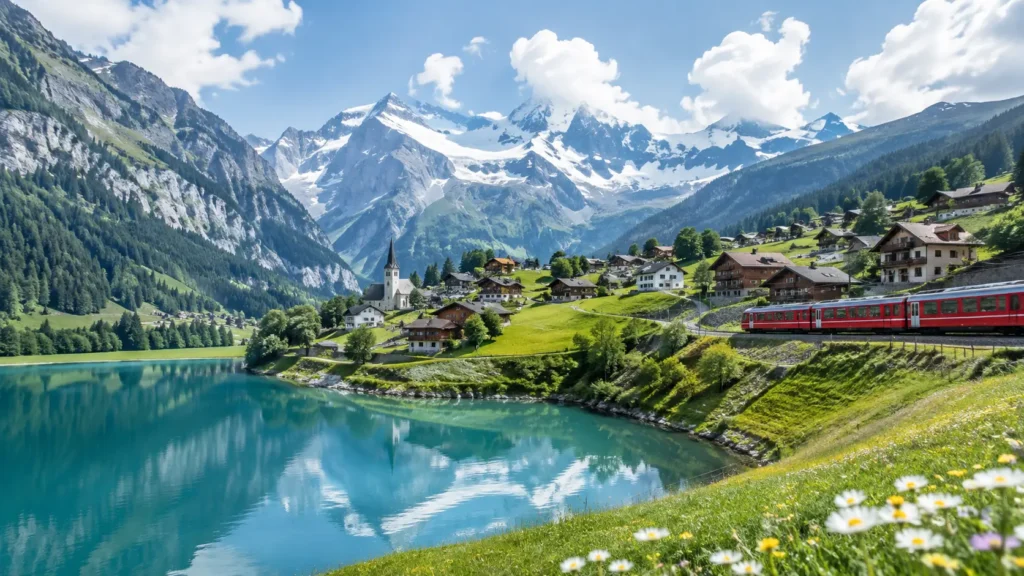
Zurich, Lucerne, Interlaken, Jungfraujoch, Zermatt and Montreux are connected by an efficient network of trains, lake boats, mountain railways and cable cars. Even without driving, it is possible to experience historic cities, Alpine villages, lakes, glaciers, mountain viewpoints and scenic train journeys in one trip.
For a first visit, a 10-day, 9-night itinerary is a comfortable starting point.
A classic route begins in Zurich, continues to Lucerne, Interlaken and the Jungfrau Region, then moves to Zermatt before finishing in Montreux. Travelers can depart from either Geneva or return to Zurich for their flight home.
The official Grand Train Tour of Switzerland also connects Zurich, Lucerne, Interlaken, Montreux and Zermatt, making this one of the most practical routes to complete by rail.
Official website:
Grand Train Tour of Switzerland
Switzerland Travel Overview
| Category | Recommendation |
|---|---|
| Recommended duration | 10 days and 9 nights for a first trip |
| Best first-time route | Zurich → Lucerne → Interlaken → Zermatt → Montreux |
| Main transportation | Trains, mountain railways, cable cars and lake boats |
| Is a rental car necessary? | Usually not for the classic route |
| Essential app | SBB Mobile |
| Currency | Swiss franc, abbreviated CHF |
| Best hiking season | Generally May to October |
| Best snow season | Generally December to March |
| Mountain planning | Keep at least one weather backup day |
| Popular passes | Swiss Travel Pass, Swiss Half Fare Card and Saver Day Pass |
| Entry for Taiwanese travelers | Short stays are generally visa-free |
| Signature food | Fondue, Raclette, Rösti, chocolate and regional wine |
Recommended 10-Day Switzerland Itinerary
Day 1: Arrive in Zurich
After arriving at Zurich Airport, take a direct train to Zürich HB, the city’s main railway station.
The journey usually takes around 10 to 15 minutes.
Avoid planning a long mountain excursion immediately after an international flight. Use the first day to explore central Zurich at a relaxed pace.
Recommended stops:
Zurich Old Town
Limmat River
Grossmünster
Fraumünster
Bahnhofstrasse
Lake Zurich waterfront
The most convenient areas to stay are around Zürich HB, the Old Town and Niederdorf.
Day 2: Zurich to Lucerne
Travel from Zurich to Lucerne by train in the morning.
After checking in, explore:
Chapel Bridge
Lucerne Water Tower
Jesuit Church
Lucerne Old Town
Lion Monument
Musegg Wall
Lake Lucerne waterfront
Most central attractions can be reached on foot, and outdoor landmarks such as Chapel Bridge and the Lion Monument do not require admission tickets.
Official website:
Lucerne Tourism
Day 3: Mount Pilatus or Mount Rigi
Mount Pilatus and Mount Rigi are both accessible from Lucerne, but it is better to choose one instead of rushing through both in a single day.
Option 1: Mount Pilatus
Mount Pilatus is suitable for travelers who want dramatic mountain scenery, cable cars and a cogwheel railway.
A popular route is the Golden Round Trip:
Lucerne to Alpnachstad by boat
Alpnachstad to Pilatus Kulm by cogwheel railway
Pilatus Kulm to Kriens by cable car
Kriens back to Lucerne
Official website:
Mount Pilatus
Ticket prices and operating routes vary by season, weather and maintenance schedules.
Option 2: Mount Rigi
Mount Rigi is suitable for travelers who prefer a relaxed day combining lake travel, easy walks and panoramic views.
A common route is:
Lucerne to Vitznau by boat
Vitznau to Rigi Kulm by mountain railway
Rigi Kulm to Arth-Goldau by train
Arth-Goldau back to Lucerne
Official website:
Mount Rigi
Day 4: Lucerne to Interlaken
Take the Luzern–Interlaken Express from Lucerne to Interlaken.
The route passes lakes, valleys and the Brünig Pass and is part of the Grand Train Tour of Switzerland.
After arriving, consider visiting:
Höhematte Park
Interlaken Ost
Interlaken West
Harder Kulm
Lake Brienz
Lake Thun
Interlaken sits between Lake Brienz and Lake Thun and is a convenient base for Grindelwald, Lauterbrunnen, Wengen and Jungfraujoch.
Official website:
Interlaken Tourism
Day 5: Jungfraujoch – Top of Europe
Jungfraujoch is one of Switzerland’s most famous mountain excursions.
A convenient route from Interlaken is:
Interlaken Ost to Grindelwald Terminal
Grindelwald Terminal to Eigergletscher by Eiger Express
Eigergletscher to Jungfraujoch by Jungfrau Railway
Main experiences include:
Europe’s highest railway station
Sphinx Observation Deck
Aletsch Glacier views
Ice Palace
Snow activities
Mountain restaurants and shops
Jungfraujoch railway station is located at 3,454 meters above sea level.
Official prices vary according to departure point, date, season and discount card. The official ticket page may show fares beginning at around CHF 119.60, but a complete round trip from Interlaken can cost considerably more.
For the high season from May 1 to October 31, 2026, seat reservations may be required on the Eigergletscher–Jungfraujoch section.
Official website:
Jungfrau Railways Tickets and Prices
Because of the altitude, do not schedule Jungfraujoch immediately after arriving in Switzerland.
Walk slowly, stay hydrated and descend if you experience significant dizziness, nausea or breathing difficulty.
Day 6: Grindelwald First or Lauterbrunnen
Option 1: Grindelwald First
Popular activities include:
First cable car
First Cliff Walk
Bachalpsee hike
First Flyer
First Glider
Mountain Cart
Trottibike
Some adventure activities depend on weather, season and queue conditions.
Official website:
Grindelwald First
The official price page may show basic Grindelwald–First transportation products from around CHF 38, but activity packages cost more.
Option 2: Lauterbrunnen and Wengen
Travelers who prefer villages, waterfalls and an easier pace can visit:
Lauterbrunnen Valley
Staubbach Falls
Trümmelbach Falls
Wengen
Kleine Scheidegg
Lauterbrunnen is famous for its dramatic valley and waterfalls. Wengen is a largely car-free mountain village with beautiful views and a quieter atmosphere than Grindelwald First.
Day 7: Interlaken to Zermatt
Travel from Interlaken to Zermatt, usually changing trains in Spiez and Visp.
Zermatt does not allow ordinary gasoline-powered private vehicles in the village.
Travelers arriving by car normally park in Täsch and continue to Zermatt by shuttle train or taxi.
Official website:
Zermatt Tourism
After arriving, explore:
Bahnhofstrasse
Historic village area
Matterhorn Museum surroundings
Kirchbrücke viewpoint
Riverside walking paths
Day 8: Gornergrat and the Matterhorn
For a first visit to Zermatt, the Gornergrat Railway is one of the best choices.
From the observation area, travelers can see the Matterhorn, glaciers and numerous peaks above 4,000 meters.
Official ticket prices vary by season and date. A summer return ticket may begin at around CHF 96 before discounts.
Official website:
Gornergrat Railway
Travelers with more time can add:
Riffelsee
Sunnegga
Five Lakes Walk
Rothorn
Matterhorn Glacier Paradise
Matterhorn Glacier Paradise reaches an elevation of 3,883 meters and includes a viewing platform and Glacier Palace.
Summer return fares may begin at around CHF 120, depending on the season and starting point.
Official website:
Matterhorn Glacier Paradise
Day 9: Zermatt to Montreux
Travel from Zermatt to Montreux by regular train through Visp.
Another way to structure the trip is to take the GoldenPass Express from Interlaken to Montreux before or after visiting Zermatt.
The GoldenPass Express connects Interlaken Ost and Montreux, passing Lake Thun, Alpine valleys, villages and the Lake Geneva region.
Seat reservations are strongly recommended during busy travel periods.
Official website:
GoldenPass Express
After arriving in Montreux, visit:
Montreux lakeside promenade
Freddie Mercury Statue
Montreux Old Town
Lake Geneva waterfront
Day 10: Chillon Castle and Lavaux Vineyards
Chillon Castle
Chillon Castle stands directly beside Lake Geneva and is one of the region’s most recognizable historic attractions.
Address:
Avenue de Chillon 21, 1820 Veytaux, Switzerland
Price reference:
Adults: CHF 15
Children aged 6 to 15: CHF 7
Official website:
Chillon Castle
Lavaux Vineyards
Lavaux stretches along the hills between Lausanne, Vevey and the Lake Geneva region.
Travelers can take the train to Cully, Lutry, Chexbres or Rivaz and walk through the terraced vineyards.
Recommended experiences:
Lavaux vineyard trails
Local Chasselas wine
Vevey
Chaplin’s World
Lake Geneva boat trips
Many hotels in the Montreux Riviera provide a Montreux Riviera Card, which may include local public transportation and discounts on attractions.
Official website:
Montreux Riviera Card
Switzerland Transportation Passes
Swiss Travel Pass
The Swiss Travel Pass is suitable for travelers who move between cities frequently and use trains, buses, boats and local transportation almost every day.
2026 adult prices:
| Validity | Second Class | First Class |
|---|---|---|
| 3 days | CHF 254 | CHF 405 |
| 4 days | CHF 309 | CHF 492 |
| 6 days | CHF 399 | CHF 634 |
| 8 days | CHF 439 | CHF 697 |
| 15 days | CHF 499 | CHF 787 |
The Swiss Travel Pass generally includes:
Most trains, buses and boats
Public transportation in more than 90 cities
Admission to hundreds of museums
Discounts on many mountain railways and cable cars
It does not mean every mountain excursion is free.
Jungfraujoch, Gornergrat and some cable cars still require additional tickets, although discounts may apply.
Official website:
Swiss Travel Pass
Swiss Half Fare Card
The Swiss Half Fare Card costs CHF 150 and is valid for one month.
It allows visitors to purchase many train, bus, boat, mountain railway and cable-car tickets at approximately half price or another reduced fare.
It is suitable for travelers who:
Have fewer long-distance travel days
Plan several expensive mountain excursions
Do not mind buying individual tickets
Already have a detailed itinerary
Official website:
Swiss Half Fare Card
Saver Day Pass
A Saver Day Pass is useful when travel dates are fixed and tickets can be purchased early.
Published starting prices may include:
With a Half Fare Card: CHF 29 in second class
Without a Half Fare Card: CHF 52 in second class
The number of low-priced passes is limited, and prices increase as availability decreases.
Official website:
Saver Day Pass
Jungfrau Travel Pass
Travelers staying in Interlaken, Grindelwald or Wengen for at least three days should compare the Jungfrau Travel Pass.
2026 adult prices:
| Validity | Regular Adult Price | Discounted Adult Price |
|---|---|---|
| 3 days | CHF 210 | CHF 165 |
| 4 days | CHF 235 | CHF 180 |
| 5 days | CHF 270 | CHF 210 |
| 6 days | CHF 290 | CHF 225 |
| 7 days | CHF 310 | CHF 240 |
| 8 days | CHF 330 | CHF 255 |
Jungfraujoch is not fully included.
A separate connecting ticket is required. During the May to October 2026 season, connecting tickets may begin at around CHF 89.
Official website:
Jungfrau Travel Pass
Scenic Trains in Switzerland
Glacier Express
The Glacier Express connects Zermatt and St. Moritz.
It is more suitable for trips of 12 days or longer because the full route takes most of a day.
Important points:
The train ticket and seat reservation are separate
Swiss Travel Pass holders still pay the reservation fee
Dining should be booked separately
Popular travel dates sell out early
Seasonal closures must be checked
The Glacier Express may not operate during part of the autumn maintenance period. Travelers should confirm the official timetable before planning.
Official website:
Glacier Express
GoldenPass Express
Route:
Interlaken Ost to Montreux
This is one of the easiest scenic train journeys to add to a first Switzerland itinerary.
The route combines the Bernese Oberland, villages, valleys and Lake Geneva scenery.
A valid Swiss transport ticket may cover the basic fare, but seat reservations are still recommended.
Official website:
GoldenPass Express
Bernina Express
The Bernina Express connects Chur or St. Moritz with Tirano in northern Italy.
It is best for travelers who:
Have 12 to 15 days
Want to continue into Italy
Enjoy railways, bridges and mountain scenery
Plan to stay in St. Moritz or the Engadin region
Official website:
Bernina Express
For a first 10-day trip, trying to include the Glacier Express and Bernina Express can create too much travel time.
Recommended Hotels in Switzerland
Hotel prices in Switzerland change significantly according to season, weekday, room type, events and ski periods.
Always confirm whether the rate includes breakfast, local city tax, cancellation rights and station transfers.
Hotels in Zurich
Hotel St. Josef
Address:
Hirschengraben 64, 8001 Zürich
Best for:
First-time visitors who want to stay near the Old Town and main station
Features:
Near Zürich HB
Walking distance to Niederdorf
Convenient for Bahnhofstrasse and central sightseeing
Official website:
Hotel St. Josef
Hotel Schweizerhof Zürich
Address:
Bahnhofplatz 7, 8001 Zürich
Best for:
Travelers with luggage, early trains or a preference for upscale accommodation
Features:
Directly opposite Zürich HB
Very convenient for airport and intercity trains
Traditional luxury-hotel atmosphere
Official website:
Hotel Schweizerhof Zürich
Hotels in Lucerne
Waldstätterhof Swiss Quality Hotel
Address:
Zentralstrasse 4, 6003 Luzern
Best for:
Train travelers, lake excursions and guests with larger luggage
Features:
Around 100 meters from Lucerne Station
Walking distance to Chapel Bridge
Convenient for the lake piers and Old Town
Official website:
Waldstätterhof Swiss Quality Hotel
Boutique Hotel Anker
Address:
Pilatusstrasse 36, 6003 Luzern
Best for:
Travelers who enjoy design hotels and walking through the Old Town
Features:
Located near Pilatusplatz
Close to the station and historic center
Stylish boutique atmosphere
Official website:
Boutique Hotel Anker
Hotels in Interlaken
Hotel Interlaken
Address:
Höheweg 74, 3800 Interlaken
Best for:
Travelers visiting Jungfraujoch, Grindelwald and Interlaken Ost
Features:
Near Interlaken Ost
Located on Höheweg
Close to the Japanese Garden
Official website:
Hotel Interlaken
Interlaken Hostels and Youth Hostels
Budget travelers should prioritize accommodations near Interlaken Ost for easier access to Grindelwald, Lauterbrunnen and the Jungfrau Region.
Official accommodation directory:
Interlaken Hostels and Youth Hostels
Hotels in Zermatt
Hotel Daniela
Best for:
Couples, families and travelers who want to stay within walking distance of central Zermatt
Features:
Warm Alpine interior
Convenient central location
Suitable for short mountain stays
Official website:
Hotel Daniela
Alpen Resort & Spa
Best for:
Families and travelers who value swimming pools and spa facilities
Features:
Around 300 meters from Zermatt Station
Convenient for the Gornergrat Railway
Family-friendly rooms and wellness facilities
Official website:
Alpen Resort & Spa
When booking a hotel in Zermatt, select a room specifically labeled “Matterhorn View” if the mountain view is important.
A Matterhorn photo on the hotel homepage does not guarantee that every room has that view.
Hotels in Montreux
MONA Montreux
Address:
Grand-Rue 81, 1820 Montreux
Best for:
Travelers who want to stay near the railway station and lakefront
Features:
Located beside Lake Geneva
Short walk from Montreux Station
Rooms marketed with lake views
Official website:
MONA Montreux
Hôtel Bon Rivage
Address:
Route de Saint-Maurice 18, 1814 La Tour-de-Peilz
Best for:
Travelers seeking a quieter lakeside stay between Vevey and Montreux
Features:
Historic hotel founded in 1864
Lakeside garden
Convenient for Vevey and the Lavaux region
Official website:
Hôtel Bon Rivage
Swiss Food You Should Try
1. Cheese Fondue
Fondue is made by melting Swiss cheeses such as Gruyère and Vacherin and eating the mixture with bread.
Restaurants often price fondue per person, and some require everyone at the table to order the same fondue.
2. Raclette
Raclette is prepared by heating cheese and scraping the melted portion over potatoes, pickled onions and cornichons.
It is especially associated with Valais and Alpine regions.
3. Rösti
Rösti is a crispy potato dish made from grated potatoes.
It may be served with eggs, bacon, sausage, cheese or creamy veal.
4. Zürcher Geschnetzeltes
A Zurich specialty made with sliced veal, mushrooms and cream sauce.
It is commonly served with Rösti.
5. Älplermagronen
Also known as Alpine macaroni, this dish usually combines pasta, potatoes, cheese, cream and onions.
It is often served with apple sauce.
6. Walliser Trockenfleisch
Air-dried meat from Valais, commonly served with cheese, bread and local wine.
7. Papet Vaudois
A traditional dish from the Canton of Vaud made with leeks, potatoes and sausage.
It can be found around Lausanne, Lavaux and Montreux.
8. Malakoff
A fried cheese specialty associated with Vaud and the Lake Geneva region.
9. Bircher Müesli
A breakfast dish made with oats, fruit, nuts and dairy products.
It originated in Zurich.
10. Swiss Chocolate and Cheese
Supermarkets, railway stations and specialty stores sell Swiss chocolate and regional cheeses including Gruyère, Emmental and Appenzeller.
Official food guide:
Typical Swiss Food
Recommended Restaurants in Switzerland
Zurich
Swiss Chuchi
Address:
Rosengasse 10, 8001 Zürich
Recommended dishes:
Cheese fondue
Raclette
Rösti
Traditional Swiss dishes
Official website:
Swiss Chuchi
Zeughauskeller
Address:
Bahnhofstrasse 28a, 8001 Zürich
Recommended dishes:
Zürcher Geschnetzeltes
Swiss sausages
Schnitzel
Traditional meat dishes
Official website:
Zeughauskeller
Lucerne
Fondue House du Pont
Location:
Near Chapel Bridge and the Reuss River
Recommended dishes:
Traditional cheese fondue
Meat fondue
Vegan fondue
Raclette
Chocolate fondue
Official website:
Fondue House du Pont
Restaurant Bündnerland
Location:
Lucerne Old Town
Recommended dishes:
Graubünden regional food
Cheese fondue
Traditional Swiss dishes
Official website:
Restaurant Bündnerland
Interlaken
Restaurant Taverne
Address:
Höheweg 74, 3800 Interlaken
Recommended dishes:
Cheese fondue
Rösti
Regional dishes
Swiss-style set meals
Official website:
Restaurant Taverne
Fondue Villa Interlaken
Recommended experiences:
Traditional cheese fondue
Chocolate fondue
Fondue cooking classes
Outdoor fondue experiences
Official website:
Fondue Villa
Zermatt
Pöstli Stübli
Recommended dishes:
Cheese fondue
Raclette
Hot-stone beef
Traditional Swiss meat dishes
Official website:
Pöstli Stübli
Cheese Factory
Location:
Inside Hotel Schweizerhof Zermatt
Recommended dishes:
Raclette
Cheese fondue
Valais specialties
Official website:
Cheese Factory
Montreux and Lavaux
Restaurant La Tour de Lutry
Recommended dishes:
Papet Vaudois
Malakoff
Cheese fondue
Local Lutry wine
Official website:
Restaurant La Tour de Lutry
Restaurant de la Tour de Gourze
Recommended for:
Vaud-style fondue
Mountain views
Lake and vineyard scenery
Official website:
Restaurant de la Tour de Gourze
How to Save Money on Food in Switzerland
Restaurant meals in Switzerland are expensive, but travelers can control costs without eating instant noodles every day.
Useful strategies include:
Book hotels with breakfast
Buy lunch from Coop or Migros
Use railway-station bakeries for sandwiches
Carry a refillable water bottle
Save restaurant meals for regional specialties
Share side dishes and cheese plates
Stay in apartments with kitchens
Check whether service is already included
It is better to spend intentionally on a few meaningful Swiss meals than to eat at expensive tourist restaurants every day.
How to Choose Accommodation in Switzerland
For Transportation Convenience
Zurich: stay near Zürich HB
Lucerne: stay near Lucerne Station
Interlaken: stay near Interlaken Ost
Zermatt: stay near Zermatt Station or Sunnegga
Montreux: stay near Montreux Station or the lakefront
For Scenic Views
Zurich: Lake Zurich or Old Town view
Lucerne: Lake Lucerne view
Grindelwald: Eiger view
Zermatt: Matterhorn view
Montreux: Lake Geneva view
For a Lower Budget
Choose hostels
Stay one or two stations outside the center
Consider shared-bathroom hotels
Book apartments with kitchens
Avoid Friday and Saturday where possible
Reserve cancellable rates early
Entry Information for Taiwanese Travelers
Taiwanese ordinary-passport holders can generally enter Switzerland visa-free for short tourism stays.
The Schengen rule allows stays of up to 90 days within any 180-day period.
Travelers may still be asked to provide:
Return or onward tickets
Accommodation details
Proof of sufficient funds
Travel purpose
Travel insurance information
Official website:
Swiss State Secretariat for Migration
As of August 2026, ETIAS has not yet officially launched and applications are not open.
European authorities have indicated that ETIAS is expected to begin in the last quarter of 2026, but the exact launch date remains subject to an official announcement.
Once ETIAS becomes operational, eligible Taiwanese passport holders traveling visa-free may need to obtain authorization before departure.
Official website:
ETIAS – European Union
Before traveling, confirm:
Passport validity
Whether ETIAS has started
Remaining Schengen days
Airline boarding requirements
Travel insurance
Return or onward ticket
Hotel reservations
Practical Switzerland Travel Tips
1. Do Not Change Hotels Every Day
A 10-day trip should generally include no more than four or five accommodation bases.
Stay at least three nights around Interlaken and two nights in Zermatt to maintain weather flexibility.
2. Check Mountain Weather
Jungfraujoch, Gornergrat, Grindelwald First and Mount Pilatus depend heavily on visibility.
Check the night before and again in the morning:
Official webcams
Cable-car status
Wind conditions
Rainfall
Mountain temperature
Trail openings
3. Do Not Rely on City Weather
Clear skies in Interlaken do not guarantee clear views at Jungfraujoch.
Clouds in Zermatt village do not necessarily mean Gornergrat has no visibility.
Always check mountain webcams directly.
4. Keep Luggage Manageable
Swiss trains are easy to use, but large luggage becomes inconvenient on mountain railways, stone streets and station transfers.
Bring luggage you can lift onto and off trains without assistance.
5. Scenic Trains May Require Reservations
A Swiss Travel Pass may cover the base fare, but premium scenic trains such as the Glacier Express may still require a paid seat reservation.
6. Do Not Schedule the Main Mountain Trip on the Final Day
Strong winds, maintenance or poor visibility may force a mountain excursion to be postponed.
Keep a backup day for Jungfraujoch and the Matterhorn region.
7. Download SBB Mobile
SBB Mobile can be used to check:
Train schedules
Transfer platforms
Live delays
Buses and boats
Ticket prices
Saver Day Passes
Replacement transportation
Official website:
SBB
Who Is Switzerland Best For?
Switzerland is especially suitable for:
Nature lovers
First-time European rail travelers
Travelers who do not want to drive
Lake and mountain enthusiasts
Couples and honeymooners
Families
Photographers
Hikers
Slow-travel travelers
However, hotels, restaurants and mountain transportation are expensive.
Mountain tickets should be listed separately in the budget instead of being treated as part of ordinary city transportation.
Conclusion: A First Switzerland Trip Does Not Need to Cover the Entire Country
Switzerland looks small on a map, but every mountain region deserves time.
A first trip does not need to include Jungfraujoch, the Matterhorn, St. Moritz, the Glacier Express, the Bernina Express, Lugano and Geneva all at once.
The most balanced first-time route starts in Zurich and continues through Lucerne, Interlaken and the Jungfrau Region, Zermatt and Montreux.
This route includes:
Zurich Old Town and city life
Lake Lucerne and Chapel Bridge
Mount Pilatus or Mount Rigi
Jungfraujoch and the Aletsch Glacier
Grindelwald and Lauterbrunnen
Zermatt and the Matterhorn
GoldenPass scenery
Montreux and Lake Geneva
Chillon Castle and Lavaux Vineyards
The key to a comfortable Switzerland itinerary is not fitting in the greatest number of attractions.
Leave room for changing weather, train transfers, lakefront walks and quiet time in the mountains.
Disclaimer:
This article is based on information from Switzerland Tourism, SBB, the Swiss State Secretariat for Migration, the official European ETIAS website, and the official websites of individual cities, attractions, transportation companies, hotels and restaurants. Ticket prices, mountain railway schedules, cable-car operations, scenic-train reservations, hotel rates, restaurant menus, opening hours, entry requirements and the ETIAS launch date may change. Always confirm the latest information directly with the relevant official website before booking or traveling.
Image source: Official Switzerland tourism websites and the official websites or social-media accounts of the featured destinations, attractions and brands.
FAQ
How many days should I spend in Switzerland for a first trip?
Ten days and nine nights is a good starting point. A seven-day trip can cover Zurich, Lucerne and Interlaken, while Zermatt, Montreux and scenic trains are easier to include with at least 10 days.
Do I need to rent a car in Switzerland?
Usually not. Zurich, Lucerne, Interlaken, Jungfraujoch, Zermatt and Montreux are all accessible by public transportation.
Is the Swiss Travel Pass always the cheapest option?
No. It is convenient for frequent long-distance travel, boats and local transportation. Travelers with fewer travel days but several expensive mountain trips may save more with the Swiss Half Fare Card.
How much is the Swiss Travel Pass in 2026?
Adult second-class prices are CHF 254 for 3 days, CHF 309 for 4 days, CHF 399 for 6 days, CHF 439 for 8 days and CHF 499 for 15 days.
How much is the Swiss Half Fare Card?
The published 2026 visitor price is CHF 150 for one month.
How much does Jungfraujoch cost?
Prices depend on the departure station, date and discount card. Official products may begin at around CHF 119.60, but a full return trip from Interlaken usually costs more.
How much is the Gornergrat Railway?
Summer return fares may begin at around CHF 96, depending on date and discount eligibility.
Can I drive into Zermatt?
Ordinary gasoline-powered private cars are not allowed in Zermatt. Drivers normally park in Täsch and continue by train or taxi.
What are the best places to stay in Switzerland?
For a first trip, the most practical bases are Zurich, Lucerne, Interlaken, Zermatt and Montreux.
Should I stay near Interlaken Ost or Interlaken West?
Interlaken Ost is more convenient for Jungfraujoch, Grindelwald and Lauterbrunnen. Interlaken West is closer to more restaurants, shops and the town center.
What food should I try in Switzerland?
Try cheese fondue, Raclette, Rösti, Zürcher Geschnetzeltes, Älplermagronen, Papet Vaudois, Malakoff, Valais dried meat, Bircher Müesli and Swiss chocolate.
Do Taiwanese passport holders need a visa for Switzerland?
Short tourism visits are generally visa-free under the Schengen rule of up to 90 days within any 180-day period.
Is ETIAS required for Switzerland in 2026?
As of August 2026, ETIAS has not yet launched and applications are not open. The European Union expects it to begin in the final quarter of 2026, but the exact date remains subject to official confirmation.