
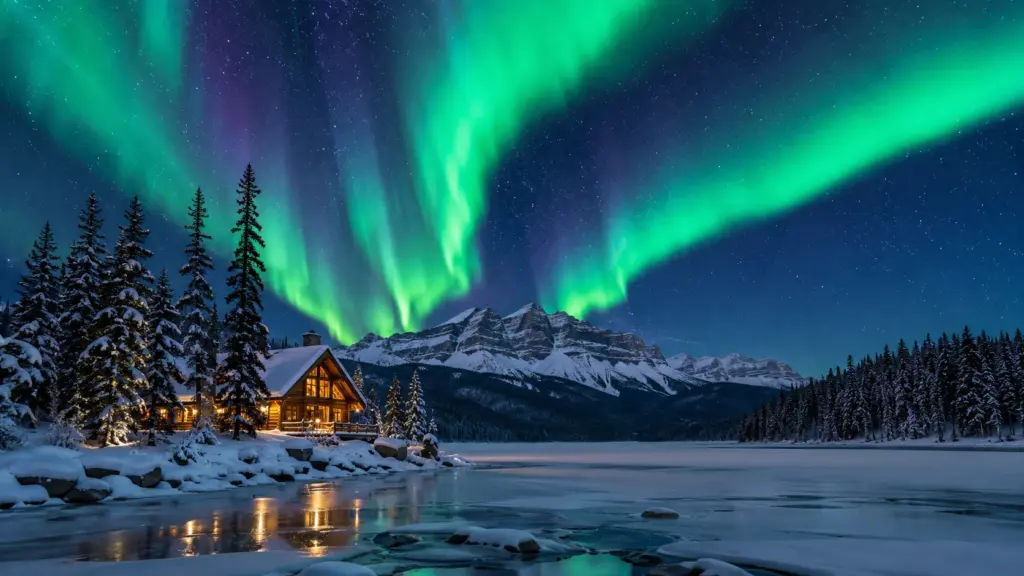
Where is the best place to see the Northern Lights in Canada in 2026? This guide compares Yellowknife, Whitehorse, Churchill, and Jasper, including the best months, recommended number of nights, transportation, accommodations, aurora tours, self-driving tips, winter clothing, and photography advice for first-time aurora travelers.
2026 Canada Northern Lights Guide|Yellowknife, Whitehorse, Churchill & Jasper: Best Time, Transportation, Hotels & Aurora Tours
If you want to see the Northern Lights in Canada, the first question is usually not whether the aurora is beautiful.
It is:
Where should you go?
Canada is enormous, and Aurora Borealis can be seen in destinations ranging from the Northwest Territories and Yukon to Manitoba and Alberta.
However, the travel experience can be completely different depending on where you choose.
If your only goal is:
“I want the best chance of seeing the Northern Lights.”
My first recommendation is:
Yellowknife.
If you want mountains, hot springs, winter landscapes, and Yukon scenery during the day:
Whitehorse may be a more balanced choice.
If you want to combine aurora viewing with polar bears and beluga whales:
Churchill is one of Canada’s most unique northern destinations.
And if you are already planning a trip through Banff, Lake Louise, and Jasper, you can simply add nighttime aurora chasing to your Canadian Rockies itinerary.
Best Places to See the Northern Lights in Canada
| Destination | Recommended Season | Main Highlight | First-Time Rating |
|---|---|---|---|
| Yellowknife | Mid-August–late September, mid-November–early April | Mature aurora tourism industry and excellent viewing conditions | ★★★★★ |
| Whitehorse | Mid-August–mid-April | Northern Lights + Yukon landscapes | ★★★★★ |
| Churchill | Especially February–March | Aurora + polar bears + beluga whales | ★★★★☆ |
| Jasper | Roughly October–March | Canadian Rockies + Dark Sky + possible aurora | ★★★★☆ |
Where Is the Best Place to See the Northern Lights in Canada?
If I could choose only one destination:
Yellowknife.
Yellowknife is located in Canada’s Northwest Territories and is one of the country’s best-known aurora destinations.
Its location near the auroral oval, relatively dry climate, and long winter nights create excellent conditions for aurora viewing.
Northwest Territories tourism information notes that the region can experience aurora activity on as many as approximately 240 nights per year.
Yellowknife also has one of Canada’s most developed aurora tourism industries.
You can find:
Aurora tours
Aurora lodges
Heated cabins
Teepees
Aurora hunting tours
Winter activities
So first-time visitors do not necessarily need to figure out remote viewing locations on their own.
1. Yellowknife|Best Overall Choice for First-Time Aurora Travelers
If you are flying to Canada specifically to see the Northern Lights for the first time, Yellowknife would be my top choice.
The main reason is simple:
The destination is highly developed around aurora tourism.
Yellowknife’s aurora season can roughly be divided into:
Fall aurora season
Winter aurora season.
Fall Aurora in Yellowknife
Approximately:
Mid-August through late September.
One of the biggest advantages is:
It is not yet deep winter.
The lakes may still be unfrozen, which creates the possibility of seeing:
Aurora Reflection
with the Northern Lights reflected across the water.
For photographers, this can be especially beautiful.
If you are worried about:
-30°C temperatures
Heavy winter boots
Standing outside in extreme cold
then late August through mid-September can be a very attractive first trip.
Winter Aurora in Yellowknife
Approximately:
Mid-November through early April.
This is the classic Canadian northern winter experience:
Snow
Frozen lakes
Forests
Cabins
Dog sledding
Northern Lights
If you want the image most people imagine when they think of a Canadian aurora vacation:
White snow + green aurora
consider:
January through March.
February and March are especially popular for winter aurora trips.
How Many Nights Should You Stay in Yellowknife?
Minimum:
3 nights.
Better:
4 nights.
If the Northern Lights are the main purpose of your trip:
4–5 nights.
Why?
Strong aurora activity does not automatically mean you will see the lights.
If there is heavy cloud cover, the aurora may be active above you while remaining completely invisible.
For aurora travel, increasing the number of viewing nights is often more valuable than simply booking the most expensive tour.
Suggested Yellowknife Itinerary
For a first visit:
Day 1
Arrive in Yellowknife
→ Rest in town
→ First Aurora Tour
Day 2
Explore Yellowknife / Great Slave Lake
→ Rest in the afternoon
→ Second night of aurora viewing
Day 3
Dog sledding / winter activities
→ Third night at an Aurora Lodge
Day 4
Free daytime activities
→ Fourth night Aurora Hunting Tour
Day 5
Depart Yellowknife
This gives you a much better weather buffer than staying only two nights.
2. Whitehorse|Northern Lights + Yukon Nature
Whitehorse is located in Yukon.
If you want your trip to include more than just waiting for the aurora every night, Whitehorse can be a great choice.
During the day, you can add:
Mountains
Lakes
Hot springs
Snow activities
Road trips
Yukon’s main aurora viewing season generally runs from around:
Mid-August to mid-April.
A commonly recommended nighttime viewing window is approximately:
10 p.m. to 3 a.m.
Yellowknife vs Whitehorse: Which Is Better?
A simple way to compare them:
Yellowknife:
More focused on aurora chasing.
Whitehorse:
More like a complete northern Canada vacation.
Yellowknife is ideal if your main thought is:
“I am going to Canada to see the Northern Lights.”
Whitehorse is better if your mindset is:
“I am traveling through Yukon, and I also want to chase the aurora every night.”
If not everyone in your group is obsessed with the Northern Lights, Whitehorse may be easier to enjoy as an overall trip.
Where to See the Northern Lights Near Whitehorse
There are several locations around Whitehorse where you can escape city light pollution.
Popular areas include:
Fish Lake
Schwatka Lake
On a clear night, you may be able to photograph:
Mountains
Lakes
Forests
Aurora
in the same scene.
That can create more dramatic landscape photographs than simply shooting an open sky.
How Long Should You Stay in Whitehorse?
I recommend:
At least 3–4 nights.
The goal is again to reduce the risk of losing your entire trip to one cloudy night.
A well-balanced itinerary could include:
Whitehorse city
-
Yukon nature
-
Hot springs
-
Aurora tours
so your days remain interesting even before nighttime viewing begins.
3. Churchill|Northern Lights + Polar Bears + Beluga Whales
If you want something beyond a standard aurora trip and prefer a true northern adventure, Churchill is extremely special.
Churchill is located in northern Manitoba.
In addition to the Northern Lights, the area is famous for:
Polar bears
Beluga whales
which gives Churchill very distinctive seasonal travel experiences.
When Is the Best Time to See the Northern Lights in Churchill?
If your main goal is the aurora:
February and March are especially worth considering.
Travel Manitoba notes that Churchill can experience auroral activity on more than 300 nights per year.
Long winter nights and very low light pollution make it an excellent aurora destination.
When Can You See Polar Bears in Churchill?
The best seasons for polar bears and the Northern Lights are not exactly the same.
In general:
Summer
→ Beluga whales
Fall
→ Polar bears
Winter
→ Northern Lights
If you want to combine:
Polar bears + Northern Lights
you need to plan dates and tours much more carefully.
Do not assume that every Churchill visit automatically includes all three experiences.
Churchill’s Biggest Challenge: Transportation
Churchill is not like most Canadian destinations where you can simply rent a car and drive there.
There is no regular highway connecting Churchill directly with southern Canada.
Most travelers arrive by:
Plane
or
Train.
Because of this, compared with Yellowknife and Whitehorse, Churchill often requires more:
Transportation budget
Accommodation budget
Tour budget
Travel time.
Who Should Choose Churchill?
Churchill is especially suitable for:
Wildlife lovers
Arctic and sub-Arctic travelers
Photographers
Polar bear enthusiasts
Travelers looking for a less typical Canadian destination
If your only goal is:
“My first-ever Northern Lights trip.”
I would still choose Yellowknife first.
4. Jasper|Add the Aurora to a Canadian Rockies Trip
Jasper is a completely different type of aurora destination.
It would not be my first recommendation for someone flying to Canada solely to see the Northern Lights.
But if you are already visiting:
Calgary
Banff
Lake Louise
Icefields Parkway
Jasper
then checking the aurora forecast every night is absolutely worth doing.
Why Is Jasper Good for Stargazing?
Jasper National Park is an important Dark Sky Preserve.
Low light pollution makes it excellent for:
Milky Way viewing
Stars
Dark-sky experiences
and under suitable solar and weather conditions, Aurora Borealis may also be visible.
Best Season for Northern Lights in Jasper
For longer nights, consider roughly:
October through March.
Winter generally provides better darkness than summer.
However, this is important:
Jasper is not Yellowknife.
If the main goal of your trip is:
“I really want to see the Northern Lights.”
I would still go farther north.
2026 Jasper Dark Sky Festival
The 2026 Jasper Dark Sky Festival is scheduled for:
October 16–25, 2026.
If you are planning an October trip through the Rockies, you can combine:
Banff
Lake Louise
Jasper
Dark Sky Festival
into a very attractive fall road trip.
Even if a major aurora display does not happen, the dark-sky experience can still be worthwhile.
What Is the Best Month to See the Northern Lights in Canada?
There is no single month that is best for every destination.
It is more useful to choose based on the type of trip you want.
If You Hate Extreme Cold: Late August–September
Best choices:
Yellowknife
Whitehorse.
Advantages:
More comfortable temperatures
Dark enough nights for aurora viewing
Unfrozen lakes may allow aurora reflections
Less extreme winter clothing
This period can be especially good for couples, families, or travelers who do not enjoy severe cold.
If You Want Snowy Aurora Landscapes: January–March
If your ideal scene is:
Snow
Forests
Cabins
Northern Lights
choose winter.
Yellowknife:
January–March is excellent.
Churchill:
February–March is especially worth considering.
Whitehorse:
Winter aurora trips are also possible.
If You Want the Canadian Rockies: October–March
Choose:
Jasper.
October is especially interesting if you want to combine the aurora possibility with the Dark Sky Festival.
What Time Do the Northern Lights Usually Appear?
There is no fixed schedule.
However, in Yukon, a commonly recommended viewing period is approximately:
10 p.m. to 3 a.m.
Aurora travel is very different from normal sightseeing.
It is not always:
Leave at 8 p.m.
Take photos at 9 p.m.
Return by 10 p.m.
Sometimes the best aurora may appear at:
11 p.m.
1 a.m.
2 a.m.
So do not plan very early activities the next morning if you are going aurora chasing at night.
Do You Need to Join an Aurora Tour?
Not necessarily.
But for a first trip, I strongly recommend booking:
At least 1–2 nights.
This is especially useful in winter.
Tour guides often know:
Where clouds are moving
Where light pollution is lowest
Which roads are safe
Where suitable lake or forest viewing areas are located
Where heated shelters are available
How to monitor local aurora conditions
If you have never driven in Canadian winter conditions, your first icy night drive should probably not be at 2 a.m. while searching for the aurora.
Aurora Lodge vs Aurora Hunting Tour
There are generally two common styles.
Aurora Lodge
You stay at a fixed viewing location and wait for the Northern Lights.
Facilities may include:
Cabins
Heated rooms
Teepees
Hot drinks
Outdoor viewing areas
Advantages:
Comfort.
Best for:
Travelers who get cold easily
Older travelers
Families
First-time aurora visitors.
Aurora Hunting Tour
A tour vehicle moves between locations according to:
Cloud cover
Aurora activity
Weather
Advantages:
More flexibility.
Disadvantages:
You may spend a long time inside a vehicle at night.
If seeing the aurora is extremely important to you, I like the combination:
One Aurora Lodge night
+
One Aurora Hunting night.
Can You Rent a Car and Chase the Aurora Yourself?
Yes.
This can be easier in fall than in deep winter.
However, you should understand:
Aurora forecasts
Cloud cover
Weather conditions
Road conditions
and you must park safely.
Never stop suddenly in the middle of a highway because you see the Northern Lights.
Look for:
Legal parking areas
Safe pullouts
Designated viewpoints
before getting out of the vehicle.
What Should You Check in an Aurora Forecast?
Do not look only at:
KP Index.
Also check:
Cloud cover
Local weather
Aurora activity
Hours of darkness.
Even if the KP Index is high:
100% cloud cover
can make the aurora impossible to see.
On the other hand, if you are already near the auroral oval, you may still see beautiful Northern Lights even when KP is not extremely high.
Can You Photograph the Northern Lights With a Phone?
Yes.
Many newer smartphones can capture the aurora very well, especially with features such as:
iPhone Night Mode
Google Pixel Night Sight
Samsung Night Mode.
If the aurora is strong, photographing it can be surprisingly easy.
If the aurora is weak, your eyes may see:
Grayish white
Pale green
while your phone’s long exposure shows a much brighter green.
That is normal.
Smartphone Aurora Photography Tips
Try not to hold your phone completely by hand.
Use:
A small tripod
A stable surface
Night Mode
A steady position.
If your phone allows a longer exposure, adjust it based on how quickly the aurora is moving.
When the aurora is moving rapidly, the longest possible exposure is not always the best choice.
How to Photograph the Northern Lights With a Camera
If you bring a camera, useful equipment includes:
Wide-angle lens
Tripod
Large-aperture lens
Manual focus
Manual exposure.
You will need to adjust based on:
Aurora brightness
Movement speed
Moonlight
Snow brightness.
Do not memorize only one ISO and shutter-speed setting before your trip.
Conditions change constantly.
What Should You Wear to See the Northern Lights in Canada?
Fall and winter require completely different clothing.
August–September
Consider:
Warm jacket
Base layer
Beanie
Gloves
Warm socks
Windproof outer layer.
Even in early fall, nighttime temperatures can feel cold when you are standing outside for hours.
January–March
Northern Canada can experience genuine extreme cold.
You may need:
Thermal base layers
Mid layers
Down jacket
Windproof outer shell
Snow pants
Insulated winter boots
Thick socks
Gloves
Mittens
Beanie
Neck warmer.
Do not focus only on your jacket.
The parts that often become uncomfortable first are:
Feet
Fingers
Face.
Do You Need to Buy Expensive Arctic Clothing?
Not necessarily.
Some tour operators and rental companies in Yellowknife and Whitehorse offer:
Winter clothing rentals.
If you are only going to northern Canada once, renting may make more sense than buying an entire extreme-cold wardrobe.
Before booking, confirm:
Whether clothing is included in the tour
Whether rental is extra
Available sizes
Boots
Gloves.
Where Should You Stay for an Aurora Trip?
There are three main accommodation styles.
City Hotel
Advantages:
Easy restaurants
Convenient transportation
Reliable heating
Comfortable travel experience.
At night, you can join an Aurora Tour.
For first-time visitors to Yellowknife or Whitehorse, this is often the easiest option.
Aurora Lodge
Advantages:
Farther from light pollution
You can watch the sky directly from the property
No need to travel back and forth from town every night.
Disadvantages:
Often more expensive
Fewer food options
Transportation needs more planning.
Cabin
If you want:
Wooden cabin
Snow
Northern Lights
the atmosphere can be beautiful.
But before booking, confirm:
Heating
Bathroom facilities
Transportation
Cell service
Meals.
Do not choose a cabin based only on Instagram photos.
How Many Days Should You Plan for a First Canada Aurora Trip?
If traveling from Asia, the United States, or elsewhere in Canada, I recommend at least:
5 days / 4 nights.
More comfortably:
6 days / 5 nights.
Actual aurora-viewing nights:
3–4 nights.
Suggested Yellowknife Northern Lights Itinerary
Day 1
Arrive in Yellowknife
→ First night Aurora Lodge
Day 2
Explore Yellowknife
→ Second night Aurora Hunting
Day 3
Winter activities / dog sledding
→ Third night aurora viewing
Day 4
Free daytime activities
→ Fourth night Aurora Tour
Day 5
Depart
Suggested Whitehorse Aurora Itinerary
Day 1
Arrive in Whitehorse
→ Aurora Tour
Day 2
Explore Whitehorse
→ Hot springs / nature
→ Second night aurora viewing
Day 3
Yukon nature excursion
→ Third night Aurora
Day 4
Fish Lake / surrounding area
→ Fourth night aurora viewing
Day 5
Depart
Suggested Jasper Aurora Itinerary
If you are already planning a Canadian Rockies trip:
Calgary
→ Banff
→ Lake Louise
→ Icefields Parkway
→ Jasper
At night:
Check the aurora forecast.
If the sky is clear:
Leave bright urban areas
→ Visit a dark-sky viewing location
→ Wait for possible aurora activity.
This is the most natural way to add the Northern Lights to a Rockies itinerary.
Can You See the Northern Lights in Vancouver?
Occasionally, during very strong geomagnetic storms.
However, if you are flying to Canada specifically for the Northern Lights:
Do not use Vancouver as your main aurora destination.
The same applies to:
Toronto
Montreal.
Strong solar activity can sometimes produce visible aurora farther south, but the chances are not comparable to destinations such as:
Yellowknife
Whitehorse
Churchill.
Can You See the Northern Lights in Calgary?
Yes, during stronger aurora activity.
Conditions improve when you leave Calgary’s city lights.
However, if you are already flying to Calgary, I would usually continue toward the Rockies.
Especially:
Banff
Jasper.
The overall travel experience is more scenic.
If I Could Choose Only One Canadian Aurora Destination
For a first trip:
Yellowknife.
Best Choice if You Hate the Cold
Yellowknife or Whitehorse:
Late August through September.
Best Choice for Snowy Aurora Photos
Yellowknife:
February–March.
Best Choice for Northern Lights + Polar Bears
Churchill.
Best Choice for Northern Lights + Canadian Rockies
Jasper.
Best Choice for Daytime Nature Activities
Whitehorse.
Best Choice for Increasing Your Chance of Seeing the Aurora
Yellowknife:
Stay approximately 4 nights.
That would be my top recommendation.
Common Canada Northern Lights Travel Mistakes
Staying Only One Night
The aurora is a natural phenomenon.
Nothing is guaranteed.
One of the easiest ways to regret your trip is:
“I booked one night, and it snowed that evening.”
At least 3 nights is much more reasonable.
Checking Only the KP Index
Cloud cover matters just as much.
A high KP Index is useless if the entire sky is covered by clouds.
Not Bringing a Tripod
Both phones and cameras perform better with stable support.
Wearing a Normal City Winter Jacket
Winter in Yellowknife or Whitehorse is not the same as winter in Vancouver.
You need a much stronger cold-weather system.
Planning Too Much During the Day
You may stay outside until very late chasing the Northern Lights.
An 8 a.m. activity the next morning can make the entire trip exhausting.
Conclusion: For Your First Canada Northern Lights Trip, Stay About 4 Nights in Yellowknife
There are many places to see the Northern Lights in Canada.
But if you ask:
“Where should I go for my first dedicated Aurora Borealis trip?”
my answer is still:
Yellowknife.
Its advantage is not only the amount of aurora activity.
It also offers:
Relatively developed transportation
Many Aurora Tour options
Winter clothing rentals
Aurora lodges
A travel infrastructure that is easy for first-time visitors to understand.
If you dislike extreme cold:
Go in late August or September.
If you want snowy dream-like scenery:
Go in February or March.
If you want more than just aurora chasing:
Whitehorse is an excellent second choice.
If you want a truly unusual northern Canadian adventure:
Choose Churchill.
And if you already plan to visit Banff and Jasper:
Simply add the aurora forecast to your nighttime routine.
The most important parts of aurora travel are not:
“Which day has the highest KP?”
They are:
Go to the right destination
Choose the right season
Stay several nights
Keep your itinerary flexible.
When a faint green band finally appears across the sky and gradually turns into a moving curtain of light, you will understand why so many travelers want to chase the aurora again after seeing it for the first time.
Image Source: Destination Canada, Northwest Territories Tourism, Travel Yukon, Travel Manitoba, Parks Canada, Travel Alberta official websites and tourism information.
FAQ
Where is the best place to see the Northern Lights in Canada?
For a first dedicated aurora trip, Yellowknife is one of the best choices. Whitehorse is also excellent, especially for travelers who want to combine the Northern Lights with Yukon nature.
What is the best month to see the Northern Lights in Yellowknife?
Yellowknife generally has a fall aurora season from around mid-August through late September and a winter aurora season from around mid-November through early April.
Can you see the Northern Lights in Canada without freezing?
Yes. Consider Yellowknife or Whitehorse in late August or September. Nights are dark enough for aurora viewing, but temperatures are generally more comfortable than the middle of winter.
When is the best time for snowy Northern Lights scenery?
January through March is a strong choice, with Yellowknife particularly popular for snowy aurora trips.
How many nights should you stay for the Northern Lights?
At least 3 nights is recommended. If the aurora is the main purpose of your trip, around 4 nights is better because cloud cover and solar activity are unpredictable.
Whitehorse or Yellowknife: which is better?
Choose Yellowknife if your main goal is aurora chasing. Choose Whitehorse if you also want mountains, lakes, hot springs, and a more complete Yukon travel experience.
Is Churchill worth visiting for the Northern Lights?
Yes. Churchill is a unique winter aurora destination and can also be combined with polar bear and beluga whale travel during other seasons. Transportation and overall travel costs are usually higher.
Can you see the Northern Lights in Banff?
It is possible during strong solar activity and clear conditions, especially away from light pollution. However, if the Northern Lights are your main travel goal, Banff alone is not the most reliable choice.
Can you see the Northern Lights in Jasper?
Yes. Jasper National Park has excellent dark-sky conditions, and the aurora can be visible when solar activity and weather cooperate. However, it is not as consistently strong as northern destinations such as Yellowknife.
What time are the Northern Lights most likely to appear?
There is no fixed time, but a commonly recommended viewing window in northern destinations such as Yukon is approximately 10 p.m. to 3 a.m.
Can a smartphone photograph the Northern Lights?
Yes. Many newer iPhones, Google Pixel phones, and Samsung devices can capture the aurora using Night Mode. A small tripod or stable support helps significantly.
Do you need an Aurora Tour?
Not necessarily, but first-time visitors—especially in winter—should consider at least one or two guided tours because local guides understand weather, road conditions, dark viewing locations, and safe nighttime travel.
How Much Does a Canada Northern Lights Trip Cost?
The total cost of a Canadian aurora vacation can vary substantially depending on:
Departure city
Airfare
Yellowknife, Whitehorse, Churchill, or Jasper
Hotel category
Number of Aurora Tours
Winter clothing rental
Dog sledding and other winter activities
Rental car
Travel season
Christmas, New Year, Spring Break, and other peak periods.
Churchill is often more expensive than a standard Yellowknife or Whitehorse trip because of its transportation and tour structure.
Aurora Tour prices, accommodations, airfare, and winter clothing rental rates can change each season.
For 2026–2027 travel, check current rates directly with destination tourism organizations, hotels, airlines, and Aurora Tour operators before booking.
Sources:
Destination Canada, Spectacular Northwest Territories, City of Yellowknife, Travel Yukon, Travel Manitoba, Parks Canada, and Travel Alberta official public information.
Disclaimer:
This article was updated in August 2026 and is intended as general Canada travel and Northern Lights planning information. Aurora Borealis is a natural phenomenon, and no destination, hotel, or tour operator can guarantee that the Northern Lights will appear on a specific date. Aurora activity, cloud cover, temperatures, road conditions, flights, tour schedules, seasonal operations, and event dates may change. Always verify current information with Canadian tourism authorities, Parks Canada, and your selected tour operator before traveling.